Six Years After Holiday Farm Fire, Millions of New Trees Are Restoring Area Forests
Weyerhaeuser’s reforestation effort surpasses Mount St. Helens replanting as burned landscapes are transformed
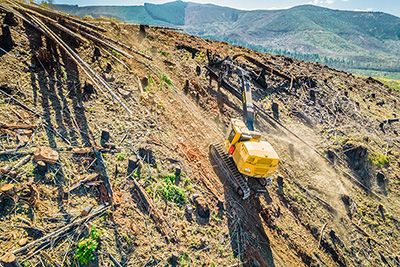
Six years after the Holiday Farm Fire, the McKenzie River Valley is showing signs of regrowth: millions of young trees now cover hillsides that the flames had left black. Across its timberlands within the fire’s footprint, Weyerhaeuser planted more than 21.4 million seedlings between 2021 and 2026—the largest reforestation effort in the company’s history, exceeding even its replanting work after the 1980 eruption of Mount St. Helens.
The September 2020 wildfire, fueled by powerful east winds and exceptionally dry conditions, burned more than 173,000 acres along the river corridor. Homes and businesses were destroyed, along with vast stretches of forest, including about 52,000 acres of Weyerhaeuser timberland burned.
For Debbi Dalrymple, a Springfield-based Weyerhaeuser forester with more than four decades of experience in the region’s forests, the destruction was particularly difficult to witness.
“It happened on such a massive scale,” Dalrymple recalled. “To look across the landscape and just see nothing but burn, ridge top after ridge top… I’d spent the last 20 years establishing and growing stands of trees. Having them erased by fire created a profound sense of loss.”
“The fire wiped out all of our previously delineated stand boundaries and age classes,” she said. “We basically had to start all over.”
Replanting could not begin until foresters had assessed the damage across thousands of acres, a complicated task in itself. To determine burn severity and identify areas suitable for replanting, technical teams relied on aerial photography, historical records and field inspections.
Intense wildfires can reduce organic matter and the soil’s ability to retain moisture, making growing conditions difficult for young trees, and the extent of damage varied considerably across the burned landscape.
At the same time, logging crews set about salvaging fire-damaged timber, while engineers worked to restore access to areas where roads, drainage systems and other infrastructure had been damaged.
Across its timberlands, the company established 260 harvest units to organize salvage operations and prepare for future forest management. Access roads were repaired and rebuilt, and hundreds of culverts damaged by the fire were replaced.
Weyerhaeuser’s Springfield operation typically planted approximately 1.4 million trees annually before the Holiday Farm Fire. Several times that number, spread over multiple planting seasons, was needed to restore the burned timberlands. Crews planted more than 21.4 million seedlings within the Holiday Farm Fire burn area from 2021 through 2026.
The McKenzie Valley restoration formed part of a much larger effort to recover from the devastating 2020 Oregon wildfires; statewide, the company planted 28.5 million trees under its post-fire reforestation program. Seedling production was expanded by 45 percent to meet the increased demand.
“We were very driven to get those trees back on the landscape,” Dalrymple said. “It had to happen.”
Along the McKenzie River corridor, the replanting effort’s results are becoming increasingly apparent: young Douglas-fir trees are growing across hillsides the fire left blackened and largely barren. Weyerhaeuser has kept up monitoring of seedling survival, management of competing vegetation and evaluation of growing conditions to improve the success of its new forest stands. Some of the earliest plantings have done better than expected.
“The first year we planted actually had the best survival,” Dalrymple said. She credited that success partly to reduced competition from other vegetation and to nutrients made available after the fire.
Shane Conway, Weyerhaeuser’s vice president of Western Timberlands, called the restoration an extraordinary undertaking.
“The scale of the effort in front of the Springfield team to restore the acres impacted by the fire was beyond comprehension,” Conway said.
“While I hope we never have to work through another challenge of this magnitude, the perseverance and grit it took to get to this point makes seeing the forest return that much more meaningful.”
Author