
Beyond the Ashes: Melanie Stanley Brite and the Work of Rebuilding a Community
A tribute to years of service, compassion, perseverance and an unwavering commitment
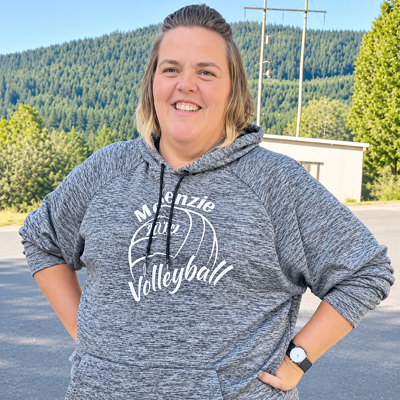
When the Holiday Farm Fire swept through the McKenzie River Valley on September 7, 2020, it destroyed homes, businesses, livelihoods and the familiar places that had connected generations of families. The fire marked the beginning of a long and difficult journey through loss, displacement and recovery.
For Melanie, the disaster was deeply personal. Her family lost their home and Meyer’s General Store & Liquor Shop, a business that had been part of her family’s life for nearly three decades. She grew up working at the store, had taken over its operation in 2003 and spent much of her adult life making it a gathering place for the community. While navigating her own devastating losses, she stepped into a role that would define much of the next six years of her life: helping her community find its way forward.
During the chaotic hours of September 7, as the fire approached, over 150 people came to the store seeking information. She helped notify many households of where to evacuate before escaping herself with her family.
Her home was gone, the store was gone, but the instinct to look after others was not.
In the immediate weeks following the fire, as a Community Organizer with the McKenzie Community Development Corporation, I was tasked with distributing generously donated gas, grocery and restaurant gift cards. Melanie worked closely with me to distribute those cards directly to legitimate evacuees and fire survivors. She spent hours helping me make calls, deliver and complete my log books.
She also helped me locate survivors and distribute the McKenzie Community Development Corporation’s Holiday Boxes in December 2020. Created to bring some comfort and financial support to households affected by the fire, the boxes included locally sourced products such as blueberries, honey and hazelnuts, along with a $50 voucher to a local restaurant and $50 in cash. It recognized that families needed immediate financial help, but it also recognized that local businesses needed support. The restaurant vouchers encouraged survivors to spend money within the community, helping local establishments recover alongside the people they served. The cash provided families with some flexibility to address their own needs. It was a way of helping neighbors while investing in the future of the valley.
These early efforts reveal something important about Melanie: she understood that rebuilding a community required more than replacing buildings. It required taking care of people, preserving relationships and helping families maintain a connection to the place they called home.
As the initial emergency response transitioned into the longer and more complicated work of cleaning up and rebuilding, Melanie continued to serve as a bridge between displaced residents and the organizations trying to help them. She worked with the American Red Cross, Lane County and numerous nonprofit organizations, helping communicate with survivors staying in hotels in the Eugene and Springfield areas. She helped coordinate cleanup efforts, support returning property owners and advocate for residents who were struggling to navigate housing and recovery programs all while simultaneously trying to address her own family’s recovery.
The emotional weight of that work was considerable. In 2022, Melanie spoke publicly about the frustration of navigating recovery systems and the emotional toll of watching neighbors struggle. She was living in a trailer while working toward rebuilding her own home. Eventually, in 2022, she received a certificate of occupancy for that rebuilt home. It was an important personal milestone, but it was only one part of a much larger recovery.
Her commitment to the valley also grew into formal community leadership. Melanie became a founding board member and secretary of the McKenzie Community Land Trust, serving on its Homeownership Committee. The organization was created to help address the long-term housing and community development challenges left by the fire. Its work focuses on creating opportunities for affordable homeownership, helping displaced residents return and ensuring that the valley remains a place where working families can afford to live.
Her involvement extended into other essential parts of community life. She served with the McKenzie Community Track and Field, Blue River Park District, Blue River Water District, Upper McKenzie Rural Fire Protection District, a founding member of McKenzie Locals Helping Locals and McKenzie Community Land Trust. She also participated in the Oregon Solutions Blue River Work Group, contributing to discussions and planning surrounding the future design of Blue River Drive.
These commitments reflect an understanding that recovery is interconnected. Housing, water, emergency services, recreation, transportation and economic opportunity all contribute to whether a community can survive and thrive. Melanie continued to invest her time in those issues, helping ensure that the people who lived in the valley had a voice in decisions affecting its future.
She was also determined to bring back the business that had connected her to the community for so much of her life. Meyer’s General Store was never simply a place to buy groceries or stop for supplies. It was a gathering place, an informal town hall and a familiar point of connection for generations of residents. People stopped to visit, exchange information, check on neighbors and catch up on the news of the valley. Its loss represented something much deeper than the destruction of a commercial building.
From the beginning, Melanie envisioned rebuilding the store as a way to restore some of that sense of normalcy. Her plans included retaining the familiar character of the original business while incorporating new opportunities, including two apartments intended for affordable housing. She could have just rebuilt the store, but that was not enough. She was adding 2 affordable apartments above the store and they were non negotiable.
But the rebuilding process proved far more difficult than anticipated. Permitting delays, construction costs, insurance limitations, financing challenges and the complexity of rebuilding in a community recovering from a major disaster all became obstacles. While some homes and public facilities gradually returned, the store remained unfinished.
Rather than abandon the effort, Melanie continued looking for ways to make it happen. She advocated for the needs of local businesses, spoke with elected officials and county commissioners, participated in community recovery events and explored alternative ways to finance construction.
In 2025, she began developing a community fundraising campaign that would allow supporters to purchase engraved paving stones and commemorative T-shirts. The idea was to invite people to become part of rebuilding the store, quite literally, brick by brick.
She also continued speaking publicly about the economic challenges facing the valley. When federal Forest Service layoffs threatened additional jobs in the region, she raised concerns about the impact on families who had already endured the fire and were still trying to regain financial stability. She understood that a community cannot fully recover if the people who live there cannot find work, support their families or sustain local businesses.
By the six-year anniversary of the fire in September 2026, Meyer’s General Store remained unfinished. Melanie had invested enormous personal resources into its reconstruction, including taking out a substantial personal loan. The project continued to face permitting and construction challenges, and the financial burden remained significant.
Yet she continued to push forward.
That persistence is perhaps one of the most defining parts of her story. The immediate relief work of 2020 evolved into years of advocacy, volunteerism, community leadership and personal sacrifice. The work did not end when the news cameras left, when the emergency declarations expired or when the rest of the world began focusing on something else. It continued through the difficult, often invisible years when survivors were still trying to rebuild their lives.
There is a tendency to measure disaster recovery by what can be seen: houses rebuilt, roads repaired, businesses reopened and public facilities restored. But much of the work that makes those accomplishments possible happens behind the scenes. It is the phone calls, the conversations, the assistance distributed, the meetings attended, the paperwork navigated, the difficult discussions with government agencies and the countless hours spent helping someone else figure out what to do next.
Melanie has been part of that work along side me and countless others in the McKenzie Valley since the very beginning.
She has experienced the fire as a survivor, responded to it as a neighbor, worked through it as an advocate, and continued recovery efforts as a community leader and business owner.
She has helped distribute essential financial assistance, supported displaced families, worked with relief organizations, participated in housing and infrastructure planning, advocated for local businesses and devoted years to restoring a gathering place that means so much to Blue River.
None of this erases the personal cost. She lost her home, her family business and the community life that had existed before September 7, 2020. She has had to rebuild while simultaneously helping others navigate their own losses. Her work has unfolded alongside the same uncertainty, frustration and exhaustion experienced by the people she has spent years supporting.
Please understand in addition to ALL of this, she volunteered thousands of hours with our kids at football games, basketball games, volleyball games and track meets. Melanie did not have any children but she had so many kids. And she supported each and every one.
Six years after the Holiday Farm Fire, the recovery of the McKenzie Valley is still a work in progress. There are homes yet to be rebuilt, businesses still struggling, families who have not returned and community needs that remain unmet.
But there is also something that the fire did not destroy: the commitment of people who refused to let their community disappear.
Melanie’s contribution cannot be measured solely by the projects she has helped advance or the organizations with which she has worked. It can also be measured in the families who received help when they needed it most, the neighbors who had someone to turn to, the survivors who found information and support, and the continued determination to make Blue River a place where future generations can live, work and belong.
The story of Melanie Stanley Brite is ultimately a story about what it means to show up for your community—not just in a moment of crisis, but for years afterward, when the work becomes harder, the progress becomes slower and the recognition becomes less frequent.
She was not simply rebuilding after the fire, she was working to preserve something far more important than buildings and businesses: the heart of the McKenzie Valley.
Thank you for the countless hours working alongside me, and thank you for your friendship. I will miss you Mel.
Jamee Savidge is a former community organizer who has served with the McKenzie Community Development Corp; as a disaster case manager, Cascade Relief Team; and as a Wildfire Housing Navigator in Lane County.