How Oregon almost became part of Canada, e
Continued From Last Week
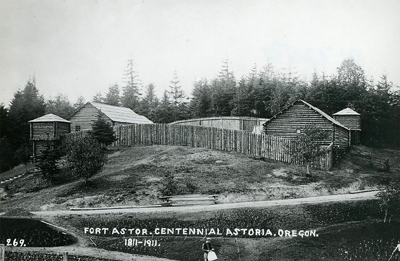
A significant number of the partners and employees of the Astorian project were British subjects. All of them now felt a little weird working for the Americans, even in a strictly commercial context. To make matters worse, Wilson Price Hunt, the guy who was supposed to be in charge, had sailed off on the Beaver, the ship Astor had sent around to replace the Tonquin, and did not return for more than a year, as the ship’s captain had opted to spend the winter in Hawaii and return to Astoria in the spring. So the British partners kind of had a free hand in his absence.
At the urging of the crafty Duncan McDougal, they used it, and sold out their operations to the North West Company. Astor was not consulted, and of course he was livid when he learned what McDougal had done. But he could do nothing about it, and when Hunt finally came back to the fort he was supposed to be in charge of, he found a British flag flying over it.
And with that, the Columbia River was entirely in British hands.
A month after the sale, the British warship Raccoon sailed into Baker Bay and “seized” the newly purchased fort. When told that he was seizing British property, the captain retorted that his orders were to seize the fort, and he was doing so.
The fact is, the captain and his crew felt very misled. They’d been expecting several fat Yankee trading ships and a warehouse full of valuable otter pelts under a foreign flag, which would mean the sailors would all stand to gain a bit of booty as a prize of war. Finding very little of the good stuff, and what there was under a friendly flag and therefore off limits, was not a welcome sight for them, and they were not inclined to do anybody any favors.
Now comes the really interesting part. When the war ended, part of the negotiations centered around the Oregon territory, and who would get to claim it: Britain or the U.S. The final treaty stipulated that all prizes taken in the war must be returned, resetting everything to the status quo ante bellum.
Well, the status quo ante bellum involved an American flag flying over the most important spot at the mouth of the river. It wasn’t sold until after hostilities broke out.
So the Astorians briefly got the fort back – although they immediately returned it to the people they’d sold it to, as a deal was a deal.
But the most important result of this was, at the treaty table, both the U.S. and Britain had claims and credible presences in the Oregon territory.
So when their status was made official by the resulting treaty, the official status of the Oregon country changed from “up for grabs” to “joint occupancy.” That meant any Brit or any American could move to Oregon and claim land.
Imagine for just a second that Fort Astoria was sold a year earlier – just before the war broke out. In that scenario, the whole Columbia River is British. It wouldn’t even come up in the treaty, most likely. Sooner or later, negotiations would ensue about where exactly the limits of the Louisiana Purchase ended and the British Oregon country began, and the border would likely have ended up somewhere around the Continental Divide or maybe a little to the west.
Had that happened, the Oregon Trail would have been a dead letter. Nobody was going to launch a fleet of prairie schooners to homestead in Wyoming or Montana, and few American citizens were likely to want to try and travel to Oregon and arrive tired and broke and hoping for the best, if Oregon was foreign territory.
Those Oregon Trail emigrants flooding out to Oregon and setting up housekeeping were the pressure that pushed the British to relinquish their claims on the Oregon country. It was just too full of Americans for them to hang onto it with the small handful of fur traders and Hudson’s Bay Company men they had there.
Feeble and incompetent as they were, the Astorians did beat that British expedition and established an undeniable colony in Oregon. Had they not done that, Astoria would have been founded by the British North West Company and the United States would have been very unlikely to be able to establish a presence in Oregon.
And then we’d all be speaking Canadian today, eh?
(Sources: Astoria: John Jacob Astor’s and Thomas Jefferson’s Lost Pacific Empire, a book by Peter Stark published in 2014 by Harper Collins; oregonencyclopedia.org)
Finn J.D. John teaches at Oregon State University and writes about odd tidbits of Oregon history. His most recent book, Bad Ideas and Horrible People of Old Oregon, published by Ouragan House last year. To contact him or suggest a topic: finn@offbeatoregon.com or 541-357-2222.
Author