Trout Stocking Cuts Threaten Area’s Economy
550,000 Leaburg Hatchery trout at risk in federal funding dispute
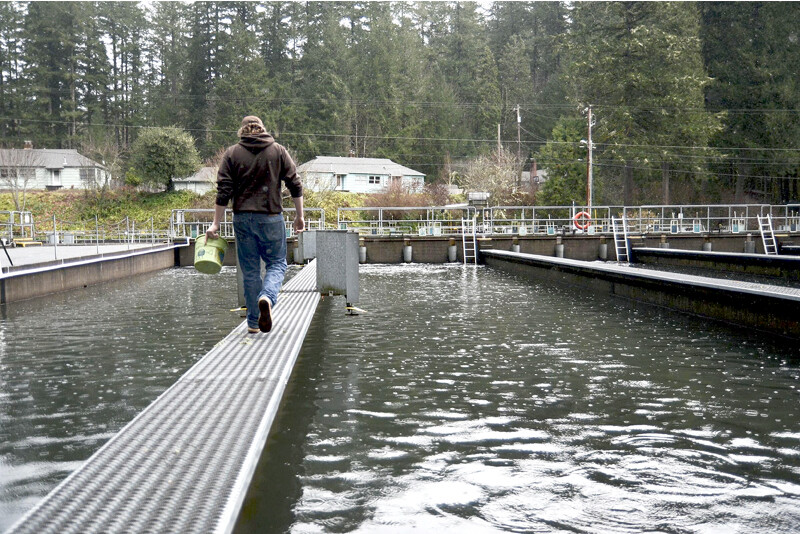
During an October 29 board meeting, McKenzie River Guides Association members discussed an estimated $520,000 funding shortfall that could result in about 550,000 fewer hatchery trout being produced in 2029. The potential reductions could eliminate stocking in the McKenzie River, Detroit and Foster reservoir, while also reducing the stocking of Green Peter Reservoir by approximately 60%.
Although no final decision to eliminate stocking was identified, several guides were concerned that delays in securing funding could have consequences well before the proposed reductions take effect.
A key issue is that trout intended for stocking in 2028 must enter the hatchery production cycle during this fall and winter.
Concerns extend beyond the future of recreational fishing. Members warned that losing hatchery trout could reduce visitor spending at local lodging establishments, restaurants, gas stations and other businesses that depend on seasonal tourism.
For the McKenzie River Valley, where businesses and residents continue rebuilding following the Holiday Farm Fire, the potential loss of a substantial source of economic activity comes at a particularly difficult time.
A 2011 study conducted for the Oregon Department of Fish and Wildlife detailed the importance anglers place on hatchery trout fishing in the McKenzie River.
The report surveyed 1,004 licensed Oregon anglers living within 20 miles of the river during February and March 2011.
It found that 78% of respondents supported stocking the McKenzie River with hatchery trout, while only 8% opposed the practice.
When asked about alternative management approaches, 65% supported continuing the existing stocking program without changes, while 60% favored stocking fewer but larger hatchery trout.
Proposals involving reductions in stocking received considerably less support.
The survey also found that 53% of trout anglers believed hatchery stocking made fishing on the McKenzie more enjoyable, as opposed to only 8% who said it reduced their enjoyment.
At the time, ODFW reported stocking approximately 131,000 hatchery trout annually in a 34-mile section of the mainstem McKenzie River. The remaining 44 miles were managed for wild trout, with catch-and-release requirements protecting wild fish throughout the river.
The study also found that hatchery stocking influenced participation for some anglers. Among those who had fished for trout on the McKenzie, 34% said large numbers of stocked trout encouraged them to fish more frequently, while 21% said insufficient hatchery trout reduced their participation.
Although those findings are now 15 years old and cannot establish current angler preferences, they provide evidence that hatchery stocking has been supported among licensed anglers.
The loss of stocking could affect expenditures for lodging, meals, fuel, groceries and other supplies, particularly during the summer tourism season when many rural businesses earn a substantial portion of their annual revenue.
Association members emphasized that the McKenzie Valley’s economy remains vulnerable following the Holiday Farm Fire, making the potential loss of an established recreational attraction especially concerning.
Developing credible economic estimates is expected to be an important part of the Guides Association’s efforts to demonstrate the broader consequences of federal funding reductions.
Association members also expressed frustration over what they described as inadequate communication with federal agencies regarding the potential reductions.
The U.S. Army Corps of Engineers and ODFW have discussed hatchery funding issues, but some believe fishing guides, local businesses and affected communities haven’t been sufficiently involved.
Members also questioned whether eliminating trout production would produce savings proportional to the funding reductions.
Hatcheries have substantial fixed operating expenses, including staffing, utilities, maintenance and infrastructure. Reducing the number of fish produced would not necessarily eliminate those costs.
Questions were also raised about whether funding reductions could affect Chinook salmon and steelhead production, along with the availability of sufficient resources to continue to operate the Leaburg Hatchery and raise fish through 2028.
Association members warned that failing to secure funding in time could result in a lost production cycle, even if financial support is eventually restored.
The issue presents three interconnected challenges for the McKenzie Valley: maintaining an established recreational fishery, protecting tourism-related economic activity and ensuring that affected communities have a voice in federal funding decisions.
Author