Beyond the Flames: Firefighters Find Strength in Peer Support
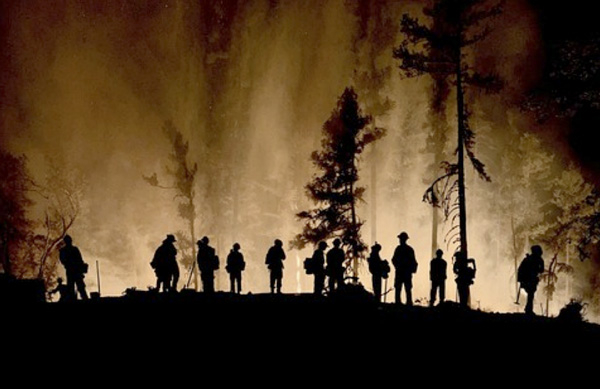
When wildland firefighters head out on assignment, the dangers most people picture are obvious-towering flames, searing heat, and steep, brush-choked slopes. But for those on the line, the hazards run deeper.
“It’s not hard to imagine the typical challenges-long shifts, poison oak, blisters, falling snags,” said Chet Behling, Assistant District Forester for the Oregon Department of Forestry’s Western Lane District. “Firefighters have gotten used to those. What’s harder to see are the mental strains. And that’s something we’re learning to better recognize, understand, and support.”
That recognition has led to the creation of ODF’s Peer Support Team, a statewide network of 15 trained employees who serve as confidential allies for colleagues navigating stress, trauma, and life’s unexpected challenges.
The program officially launched in 2022, but its roots go back to the turbulent year of 2020-marked by the devastating Labor Day fires, the sudden loss of an ODF employee, and the weight of the COVID-19 pandemic. At the time, there was no formal way for staff to process the emotional fallout.
“Don Everingham, who worked closely with those impacted by the Labor Day fires, and Teresa Williams, who helped her coworkers through the death of a colleague in Klamath, were instrumental in saying, ‘We need something more,'” said Bob Arnsmeier, the training coordinator for ODF’s Southern Oregon Area and one of the first members of the Peer Support Team.
Every team member completes training in Critical Incident Stress Management and receives specialized instruction through Responder Life, a nonprofit that supports first responders. They also travel statewide when needed, offering one-on-one support after critical incidents. By Oregon law, conversations with the team are strictly confidential.
Still, Arnsmeier said the real strength of the program isn’t the formal training-it’s the trust that comes from shared experience.
“We’re naturally more comfortable talking with people who’ve walked in our shoes,” he said. “People who have survived something tough and figured out how to keep going.”
For Arnsmeier, that shared experience comes not only from firefighting but from his years as a deputy sheriff. He carries the memory of tragic calls, from fatal crashes to suicides, and one incident in particular-the line-of-duty death of a coworker in a car wreck.
“After it happened, we all kind of looked at each other with an implied, ‘Now what do we do?'” he said. “That question-‘Now what?’-is one a lot of people ask themselves after trauma. And that’s where this team can step in.”
Behling said the support is available to everyone-full-time staff, seasonal firefighters, even those from other agencies who come to help on Oregon’s blazes. Seasonal crews, he noted, face unique struggles when fire season ends.
“They’re highly valued and often part of a tight-knit group at their local office,” Behling said. “Then fall comes, and they’re laid off. Suddenly the structure and camaraderie are gone. That can be a tough adjustment. We’re here for them too.”
The team also helps people facing life changes beyond the fireline-divorce, substance abuse, parenting challenges, or simply the feeling of being overwhelmed.
“No issue is too small if it impacts your work and your life,” Behling said. “Sometimes it’s just about knowing you have someone to reach out to, and an even higher value in actually making that call.”
Most connections happen through word of mouth, but the Peer Support Team also maintains a website with bios, so employees can find someone who understands their particular struggle. Additional resources-such as ODF’s contract with Responder Life, the Employee Assistance Program, and mental health benefits through insurance-are also available.
In the end, Behling said, it comes down to building resilience in a job where the challenges, both visible and invisible, can be relentless.
“Our people are tough,” he said. “But even the toughest of us sometimes need someone to listen. That’s what this team is for.”
Author