Marking Five Years of Regeneration on the McKenzie
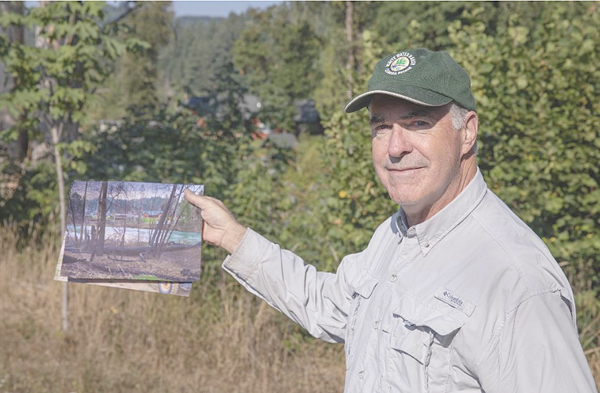
LEABURG: On a golden September morning, Jim and Jane Russell stood at the edge of their Whitewater Ranch, waiting to greet visitors from the Korea Forest Service. The delegation came to learn how Oregonians are replanting riparian forests after wildfire – lessons written into the recovering landscape along the McKenzie River.
“This area is recovering so well – and we are actually qualified for shade credits,” Jim Russell said, gesturing toward a wall of young trees and shrubs planted by the Pure Water Partners (PWP) program. The Freshwater Trust’s “temperature trading” system provides incentives for projects that cool streams. “Pure Water Partners did everything we would’ve wanted to – but we wouldn’t have had the capacity to start until now.”
The Russells’ story is one of many in the McKenzie Valley as landowners, utilities and conservation groups mark five years since the Holiday Farm Fire. That blaze consumed more than 170,000 acres and devastated 25 miles of the McKenzie – the sole drinking water source for 200,000 people.
From crisis to collaboration
In the fire’s immediate aftermath, the Eugene Water & Electric Board (EWEB) and PWP mobilized to stabilize hillsides, protect water quality and begin recovery. Crews conducted burn surveys, removed hazard trees, installed erosion barriers and cleared invasive weeds.
Over time, the work expanded into long-term restoration. PWP teams – often in partnership with the Northwest Youth Conservation Corps – have assessed more than 300 properties, removed dense thickets of blackberry and Scotch broom, and planted more than one million native trees and shrubs along riverbanks.
“After the fire, we were overwhelmed,” said Jane Russell. “We had buildings to rebuild, insurance to sort out, tractors to replace, and forests to replant. To have Pure Water Partners come in and take care of the riverfront was just a godsend.”
Healing landscapes, healing people
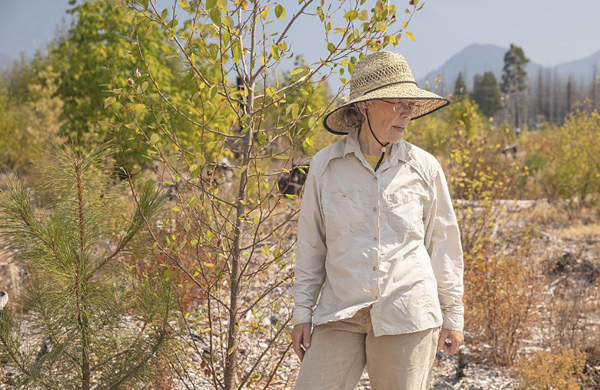
Farther upstream in Blue River, fourth-generation resident Sue McAlister tended her young trees before the day’s heat set in. “It’s a heat warning day, so we have to make sure everything’s wetted,” she said. “We’re still struggling with that balance: being aware but not constantly hyper-alert, because that’s so wearying.”
McAlister’s land once held oak savannah. Now, rows of new shrubs and pines rise where thickets of Scotch broom once stood. “They had a crew that did a fantastic job. All the other plants have come back and the Scotch broom has barely come back. So that’s been really wonderful,” she said.
Her voice falters when recalling the fire. “If people are still talking about the fire and you didn’t go through it – it’s still real to us and it’s still impacting our lives. So be gentle with us.”
Building trust over time
The recovery has become a model far beyond Oregon. “Drinking water source protection is a collaborative endeavor, as most water providers do not own their entire watersheds,” said EWEB environmental specialist Nancy Toth. “The trust we built with both partner organizations and the community was vital for working together in the wake of the disaster. But it didn’t form overnight. Like any relationship, it takes time – and follow-through – to build trust.”
That trust is paying off. Where bare slopes once funneled ash and mud into the river, riparian buffers now hold firm. Where homes once lay in ruins, families are rebuilding – often with salvaged timber from their own land.
McAlister looks across her property, where grapes planted by her great-grandfather are fruiting again, and notes the return of baby quail, grouse and deer. “Seeing the animals healthy enough to reproduce and start again… we’re hoping to see the community grow and revive a little more as well.”
Looking forward
What began as emergency response is now transitioning into stewardship. With millions of new plants establishing themselves, riverside regeneration is increasingly self-sustaining.
“It’s very wonderful to see things come back,” McAlister said. “There’s a whole line of pines about waist high, and other places shoulder high. I just feel like, ‘Okay, maybe I will live to see a forest.'”
For the Russells, the work is about both farming and legacy. “We feel tremendous responsibility living right by the river – especially growing crops here,” Jane Russell said. “We’re all organic and we really try to take care of the river as best we can. Restoring the river’s greenbelt here is really important to us.”
Five years on, the scars of the Holiday Farm Fire remain. But so do the seeds of recovery.
Author