
Boat Builders Revisit McKenzie River’s Legacy in Two-Week Workshop
Students came from across the U.S. to the birthplace of a river-running icon
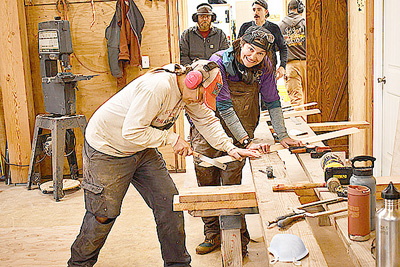
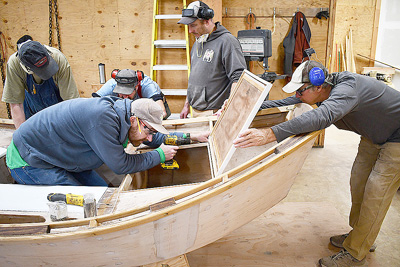
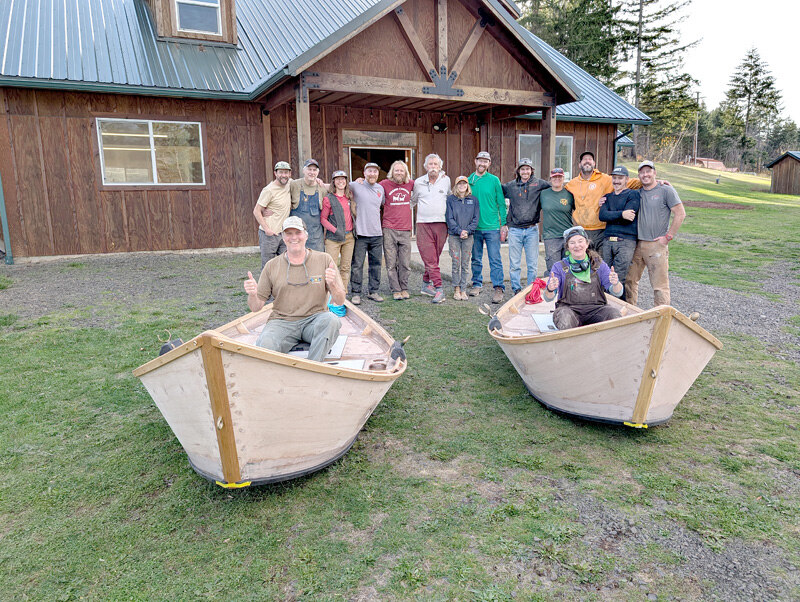
VIDA: Above the banks of the McKenzie River, where one of the world’s most iconic riverboats was born, a new generation of builders was busy keeping an outgrowth of that legacy alive. Twelve students from across Oregon, the West, and the Southwest gathered this month in Vida for a two-week class exploring both the craft and history of the whitewater dory – a design that began on the McKenzie and went on to conquer rivers across the country.
The classroom’s atmosphere was filled with both enthusiasm and accomplishment. One participant called the sessions “amazing and fun,” while another joked that their “ears are leaking out information” from all they were learning.
The workshop, hosted by the McKenzie River Discovery Center, was led by veteran boatbuilder and river guide Brad Dimock, along with fellow Colorado River dory builders Cricket and Glade Zarn.
While the design of the boats they were building may appear a bit different from what’s normally seen in Pacific Northwest waters, there’s a strong connection between the Doryak, the contemporary Colorado River dory, and the McKenzie River drift boat. Both share features such as flat bottoms, rocker, and flat sides, Dories though, feature enclosed decks and additional structure features for navigating rougher water.
The Colorado River design was spawned right here on the McKenzie in 1962, when boat builder, Keith Steele assembled two dories (adapted McKenzies) for environmentalist and Colorado River aficionado Martin Litton.
Building the Doryak, or the larger Colorado River dory, is similar to constructing a McKenzie River drift, according to Roger Fletcher, author of “Drift Boats & River Dories.” He calls the building technique “free form construction, where stem post, transom, side panels and frames are pre-formed and then the boat is assembled without use of a strongback or jig.”
That approach results in a very efficient built. “The differences with the Colorado dories, big or small, is that watertight bulkheads and compartments are built into the interior of the boat for both storage space and flotation..” Fletcher says.
That connection between the two rivers was central to the class. The Zarns and Dimock taught participants how to build a Doryak of their own, the one-person Colorado River dory that shares the same DNA as the original McKenzie design.
Like their predecessors, the new boats coming out of the classroom carry the same blending of function and beauty – vessels built not just to float – but to tell a story of craftsmanship, adventure, and the enduring link between Oregon’s rivers and America’s wider river-running culture.
This year the class proved so popular that eight hopeful builders were placed on a waiting list, a sign that the McKenzie’s boat-building tradition – more than a century old – continues to inspire those drawn to the water.
Author

Related Articles

My Alfa Romeo’s dashboard is falling apart and the warranty won’t cover it
Jay Catelli’s Alfa Romeo dashboard is defective. He has a warranty that covers interior damage, but the company says his specific part is on a secret exclusion list. Can he get the $14,000 repair covered?