Chemical Fallout of Wildfires May Last For Years Underground
Study Links Wildfire Heat to Toxic Chromium in Groundwater
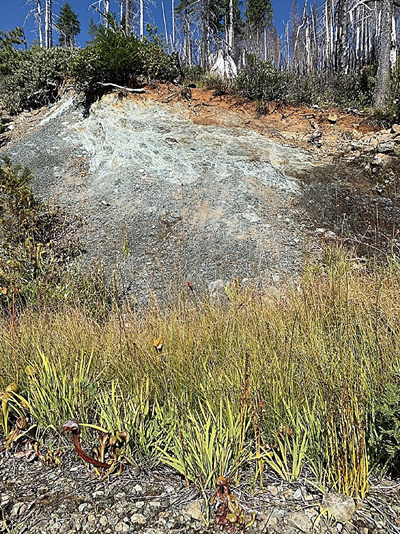
When wildfires race through forests, the most visible damage is left behind in blackened trees and ash-covered ground. But new research suggests another, far less visible threat can linger beneath the surface – one that could affect drinking water long after the flames are gone.
A study by University of Oregon researchers has found that the intense heat from wildfires can chemically transform a naturally occurring soil mineral into a toxic form of chromium that can persist in groundwater for months or even years. The findings were published recently in the journal Environmental Science & Technology.
The research focuses on chromium, an element commonly found in certain rocks and soils. In its most common natural form, chromium-3, the element is generally harmless and even plays a role in human metabolism. Under extreme heat, however, chromium-3 can be converted into chromium-6, a highly toxic and carcinogenic compound best known as an industrial pollutant.
“Wildfires are becoming more frequent and more severe in the Pacific Northwest,” said lead author Chelsea Obeidy, a soil scientist who conducted the research as a doctoral student at the University of Oregon and is now at California State Polytechnic University, Humboldt. “We wanted to know whether fires could be mobilizing contaminants of concern.”
The study examined serpentine-rich landscapes in southwestern Oregon, where naturally chromium-rich rocks are common and wildfire risk has been increasing. Serpentine geology is found in pockets across the West and is especially prevalent in parts of the Rogue River-Siskiyou National Forest.
To better understand how wildfire heat affects these soils, researchers collected samples from Eight Dollar Mountain, a serpentine-rich hillside within the national forest. Soil was gathered from the summit down the slope to capture differences in weathering. More weathered soils near the summit tend to contain greater amounts of chromium-3 released from broken-down rock.
In laboratory experiments, the team subjected the soils to simulated wildfire conditions, heating them for two hours at temperatures ranging from 400 to 1,500 degrees Fahrenheit. They then measured how much chromium-6 formed.
The results showed that chromium-6 formation peaked not at the highest temperatures, but within ranges commonly reached during real wildfires. In heavily weathered summit soils, the greatest conversion occurred around 750 degrees Fahrenheit. In less weathered soils lower on the slope, chromium-6 formed mainly at higher temperatures, near 1,100 degrees.
The researchers attribute the differences to variations in soil chemistry and the availability of chromium-3 at different locations on the hillside.
In a second experiment, the team tested whether the newly formed chromium-6 could move into water. They packed burned soils into columns and flushed them with rainwater over the course of a week, simulating roughly six months of rainfall seeping through the ground.
Depending on where the soil came from and how hot it had burned, chromium-6 concentrations in the water exceeded U.S. Environmental Protection Agency drinking water standards for periods ranging from six months to nearly two and a half years.
“This could have a lasting impact on a burned landscape,” Obeidy said. “It suggests we may need to be sampling for chromium-6 after fires in areas with certain rock types.”
Senior author Matthew Polizzotto, an earth scientist and environmental chemist at the University of Oregon, said the findings also highlight how variable soil conditions can be over short distances.
“They change over really small spatial scales,” Polizzotto said. “If we want to assess risks accurately, we have to understand how much things can vary from place to place.”
That variability has implications for land managers and communities concerned about post-fire water quality. While agencies such as the U.S. Forest Service routinely assess erosion, flooding and other hazards after wildfires, chromium-6 is not typically included in post-fire contaminant testing.
At the same time, researchers are increasingly documenting how heavy metals such as manganese, lead and nickel can accumulate in burned soils and migrate into waterways. The new study suggests chromium-6 should be added to that list of concerns in areas underlain by chromium-rich geology.
The research also points to important differences between high-intensity wildfires and lower-intensity burns. In the experiments, cooler fires – similar to prescribed burns or traditional cultural burns used by Indigenous communities – produced little chromium-6. While more study is needed, the findings suggest carefully managed burns may help reduce fuel loads without triggering the same chemical risks.
For now, the researchers emphasize that their work represents an early step in understanding how wildfire behavior and underlying geology interact in a warming, drying climate.
“We’re really at the infancy of figuring out all the factors we need to consider,” Polizzotto said.
Author