Springfield Faces Enrollment Declines, Budget Pressures
District warns of difficult choices as costs rise and classrooms empty
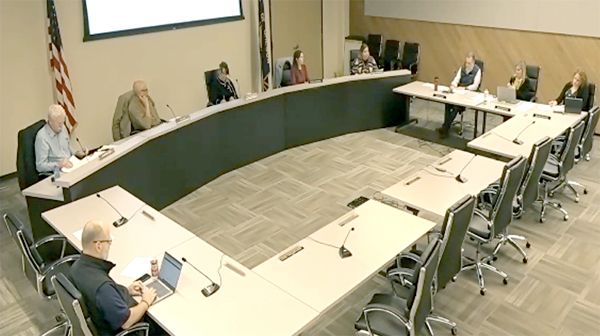
The Springfield School District has begun early budget planning for the coming year, warning that declining enrollment, rising labor costs and underused school buildings could force difficult decisions in the months ahead.
During their January 8 work session, the district’s budget committee – which oversees a budget of more than $200 million – received an extensive briefing on current financial conditions and the emerging challenges that could affect schools throughout the region.
Superintendent Todd Hamilton opened the meeting by thanking committee members for taking on what he described as “one of the most consequential responsibilities in the district,” noting that budget planning now begins months earlier than in the past due to increasing uncertainty.
Chief financial officer Brett Yancey told committee members that this year’s budget process will be “especially challenging,” echoing financial stress already playing out in neighboring districts across Lane County and Oregon.
“This is not just a Springfield issue,” Yancey said. “Districts everywhere are grappling with enrollment loss, labor costs and aging facilities.”
At the core of Springfield’s budget concerns is a steady decline in student enrollment – a trend that directly affects state funding.
Yancey said that roughly 600 students who would normally attend Springfield schools are now registered for homeschooling, significantly reducing district revenue. Enrollment projections for the 2025–26 year have already been revised downward, with further adjustments possible.
Statewide demographic changes are contributing to the decline, Yancey said, since younger families have fewer children and face housing and employment challenges. However, budget committee members questioned whether Springfield’s enrollment loss may be sharper than the state average and whether targeted efforts could help retain students.
Committee members discussed the possibility of surveying homeschool families to better understand why they left the district and whether changes could bring students back.
Enrollment declines are also leaving many district buildings partially empty.
According to data presented at the meeting, Springfield’s elementary schools are operating at just over 71 percent capacity on average, with middle and high schools near 75 percent. Districtwide, only about 73 percent of available classroom space is currently in use.
The Maple Elementary School was highlighted as a particular concern, with fewer than 250 students in a building designed for far more. While no recommendations were made, Yancey said the information will likely prompt future school board discussions about boundary changes, consolidation or possible closures.
Even as enrollment falls, the district added $5.5 million this year for salaries and benefits, largely due to automatic experience step increases for employees. Although Springfield initially budgeted for no cost-of-living increases, those agreements have since been reached with two employee groups.
Classified staff received a 4.15 percent cost-of-living increase and higher insurance benefits – offset by the elimination of more than 12 full-time equivalent positions. Administrators and professional staff received a 2.7 percent increase, with two positions cut.
Negotiations with certified teachers are still in mediation. Yancey warned that any settlement above zero percent would likely require additional staff reductions.
Beyond staffing and enrollment, the district is also facing the potential of new costs tied to its aging school buildings.
In one instance, insurance exclusions affecting older structures with large wooden truss systems could require expensive structural inspections and repairs. Yancey cited a similar-sized Oregon district that spent more than $1.5 million addressing comparable issues.
“These are costs that can’t be ignored,” Yancey said. “They don’t go away just because enrollment is down.”
Springfield is currently projected to end the year with a $13 million fund balance – about 8.5 percent in reserves. That figure is above the district’s policy minimum but could go down if enrollment continues to slide.
Much now depends on upcoming state economic forecasts set for February and May, along with unresolved labor negotiations, and the continued downward enrollment trends. The district’s largest revenue source – the State School Fund – is heavily influenced by student counts, making even small declines significant.
Formal budget meetings will begin in May, but committee members emphasized that the most difficult conversations may still be ahead.
“We’re early in the process,” Yancey said, “but the signals are clear. This will be a tight budget year.”
The budget committee plans to continue meeting through February and March as district staff refine projections and explore options before presenting a proposed budget to the school board in the spring.
Author