Department Tests Equipment, Roof Safety Procedures
Controlled Training Conditions for Firefighters Takes Center Stage
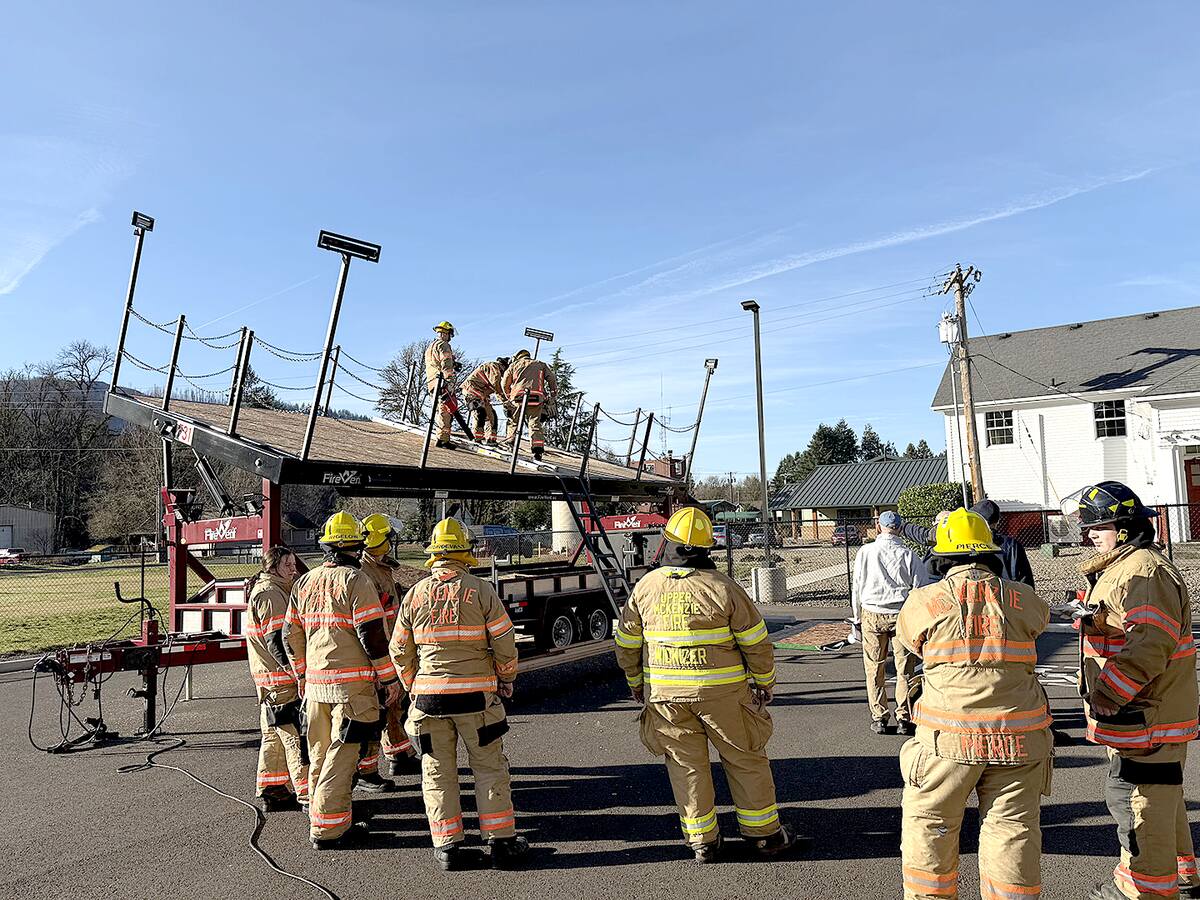
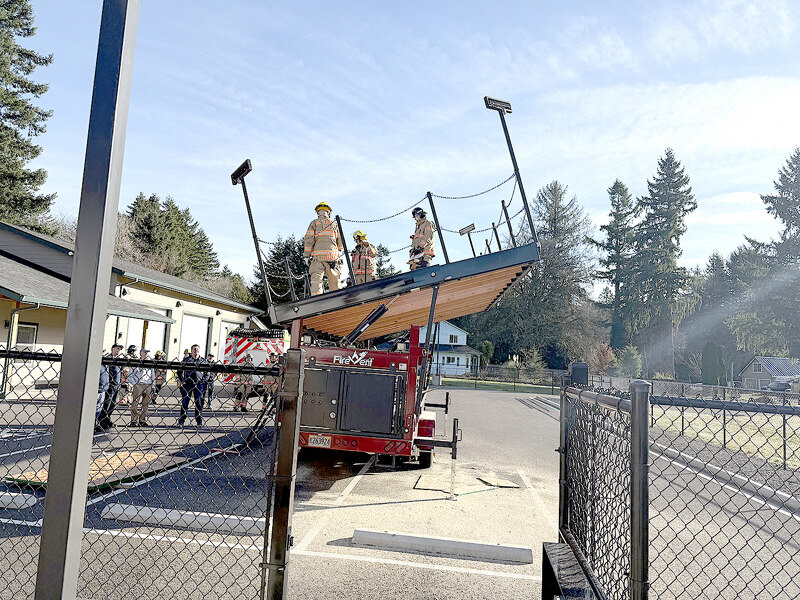
LEABURG: McKenzie Fire personnel recently had a chance to practice specialized roof-ventilation techniques during Wednesday training sessions focused on improving firefighter readiness and on-scene safety.
Central to the sessions was a specialized tilting-roof training apparatus that agencies can borrow for approximately a week and a half. The equipment is delivered directly to a station, though departments must provide their own lumber to cut up during training. Day and night crews practiced together using adjustable roof pitches that simulate a range of real-world conditions.
Safety considerations dominated much of the training. McKenzie Fire & Rescue Chief Darren Bucich said he’s “not a fan of putting people on the roof of a burning house if I don’t have to.” Eliminating hazards such as snow, rain, ice, and metal roofing surfaces he said, was essential to reducing preventable risk during exercises.
Firefighters also reviewed practical tool use and equipment versatility. Standard roof ladders equipped with ridge hooks – carried on all department fire engines – remain a key safety feature, while crews can also adapt common tools, including shovels, for bracing.
Beyond equipment logistics, the training highlighted the technical demands of vertical roof ventilation, a critical firefighting tactic used to release trapped heat, smoke, and toxic gases from a burning structure. The sessions also stressed the use of full protective gear, coordinated two-person teams, and careful assessment of roof stability before cutting ventilation openings.
When up on the roof, a designated crew member tested structural integrity while a “sawyer” performed precision cuts using a chainsaws or rotary saw. Firefighters also practiced cuts to locate roof joists, fold-back cuts for panelized roofs, and ladder-assisted footing on steep or tilted surfaces. Additional training included timing ventilation cuts to support interior fire-attack crews.
Bucich said the continued emphasis on structural training and controlled safety conditions is intended to improve firefighter preparedness while minimizing risks during emergency responses.
Author