“Second River” Part of High-Stakes Plan
23 million gallons of McKenzie water needed
The Springfield Utility Board is moving forward with long-range plans to secure the city’s drinking water future. Utility officials say water demand in Springfield is projected to increase by 48% over the next 50 years, driven by population growth and economic development.
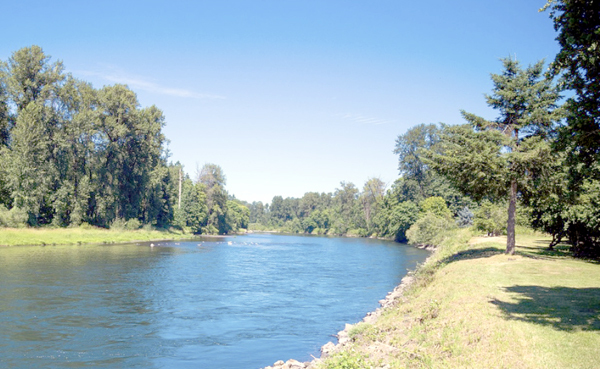
A proposed new water intake and treatment system on the McKenzie River, is planned to meet rising demand and strengthen Springfield’s resilience to natural disasters. The river-based system aims to supplement the city’s existing groundwater wells and provide additional capacity to serve homes, businesses and essential service.
Currently, most of Springfield’s drinking water comes from groundwater sources. SUB also operates a treatment facility on the Middle Fork Willamette River capable of producing up to 6 million gallons per day. However, officials say adding a second surface water source would diversify the system and reduce risk if one source becomes unavailable due to drought, contamination or infrastructure damage.
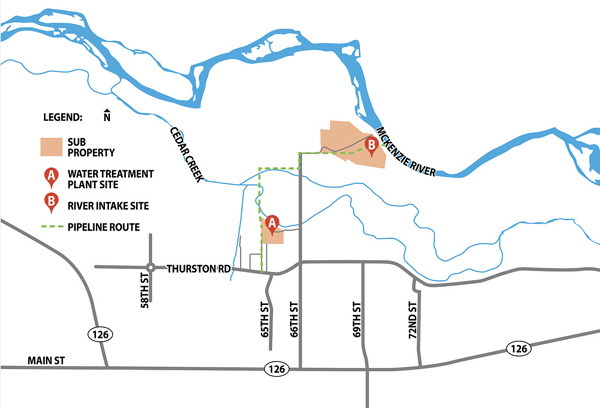
The proposed project involves construction of a new intake and pump station along the McKenzie River, along with a filtration facility planned near the Thurston Middle School. Designs call for landscaping, trees and architectural screening to help the treatment plant blend into the surrounding neighborhood.
Underground pipelines would connect the intake site to the filtration plant and integrate the new supply into Springfield’s broader water distribution network.
At full buildout, the system could produce up to 23 million gallons of treated drinking water per day. According to SUB, the facility would use advanced membrane filtration technology tailored to the McKenzie River’s water quality to deliver high-quality drinking water.
Project planners say the buildings will be constructed to meet rigorous seismic standards – a key consideration in earthquake-prone western Oregon. Officials stress the added redundancy and structural resilience would allow Springfield to recover more quickly following a major seismic event.
In addition to expanding capacity, the project would also be a move to preserve Springfield’s existing water rights on the McKenzie River and improve fire protection citywide by maintaining adequate water flow and pressure.
SUB officials emphasize that maintaining multiple water sources is critical for regional stability, including providing reliable service to the community’s two major hospitals and to local employers whose operations depend on consistent water access.
The utility secured water rights on the McKenzie River in 2007 as part of its long-term supply planning. Although those rights remain in place, the river source has not yet been put to beneficial use for drinking water. That would occur once the intake and treatment facilities are constructed and operational.
The project is currently in the design and permitting phase. Construction is anticipated to begin in 2028, with the new facilities expected to come online by 2031.
Funding will come from a combination of water rates paid by current and future customers and long-term bonds repaid over time. SUB is also pursuing state and federal funding to help offset costs.
Utility leaders describe the effort as a generational investment in Springfield’s infrastructure – one aimed at safeguarding public health, strengthening emergency preparedness and supporting economic growth for decades to come.
Author