Suppression Legacy Raises Stakes for Old Growth Forests
Lessons From the McKenzie: Why Formerly Fire-Resilient Areas Now Face Severe Burns
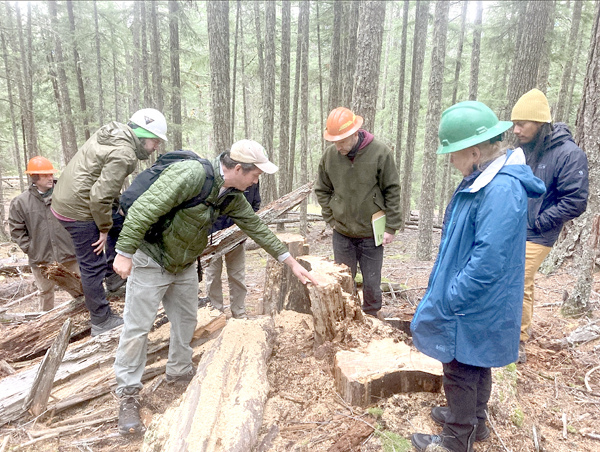
A new scientific analysis finds that the Pacific Northwest’s mature and old-growth forests are most vulnerable to severe wildfire in places that historically experienced frequent, low-intensity burns – a shift researchers say underscores the long-term consequences of fire suppression.
The study, conducted by scientists at Oregon State University and the USDA Forest Service Research & Development, examined 24 million acres of federal forestland in western Oregon, Washington and California governed by the Northwest Forest Plan.
Researchers found that 75% of the mature and old-growth forest areas facing the highest risk of severe wildfire are landscapes that once burned regularly at low to mixed severity. Before fire suppression policies took hold, these frequent, lower-intensity fires played a critical role in maintaining forest structure and resilience across the western United States.
The research was led by Bruno Aparicio and Meg Krawchuk of OSU’s College of Forestry. Using advanced modeling techniques, the team mapped wildfire exposure and identified areas where conservation, restoration or targeted protection could reduce risk.
“These forests are culturally, economically and ecologically significant,” Aparicio said. “As wildfire activity intensifies under climate change, understanding where and why mature and old-growth forests are most vulnerable is essential.”
Fire suppression in the Northwest dates back to the mid-19th century, when Indigenous fire stewardship practices were disrupted by forced removals. Aggressive federal fire suppression policies followed the catastrophic Great Fire of 1910, which burned an area roughly the size of Connecticut across forests in Idaho, Montana, Washington and British Columbia and destroyed several towns.
In the decades since, forests that once experienced frequent surface fires have undergone significant structural changes. Shade-tolerant and fire-intolerant species have proliferated, increasing fuel loads and the likelihood of stand-replacing fires – blazes intense enough to kill most or all trees in an area.
The study also highlights the importance of “fire refugia,” pockets of landscape that are less prone to crown fire due to factors such as terrain, vegetation type, proximity to water and slope orientation. Sometimes described as biodiversity “lifeboats,” these areas can buffer forests from severe fire.
Researchers estimate that fire refugia could reduce the overall risk of severe fire across the study area by as much as 20%. Of the 7 million acres identified as mature or old-growth forest, about 1.8 million acres fall within refugia.
The analysis found that subalpine mature and old-growth forests near the timberline are relatively rare and highly vulnerable. The Klamath Mountains region emerged as a particular hotspot for wildfire exposure and potential carbon emissions.
Through much of the 20th century, logging drove steep declines in mature and old-growth forests on national forests. Since 2000, however, wildfire has overtaken logging as the primary threat. Federal lands have experienced a net loss of 2.6 million acres of mature forest and 700,000 acres of old-growth forest during that time.
“Current trends show a continuous increase in area burned and wildfire severity in the western U.S. over the last decade,” Aparicio said, citing more human-caused ignitions, warmer and drier fire seasons, worsening drought and accumulated fuels linked to decades of fire exclusion.
Krawchuk said the findings can help land managers prioritize where protection alone may suffice and where active restoration is needed to return forests to healthier fire regimes.
“Protecting mature and old-growth forests isn’t just about preserving the past,” she said. “It’s a key strategy for climate mitigation, ecosystem resilience and long-term forest stewardship.”
Author