Clean Water Goals Collide With Legal Concerns at EWEB Meeting
Utility’s Board says watershed proposal was too broad and risky
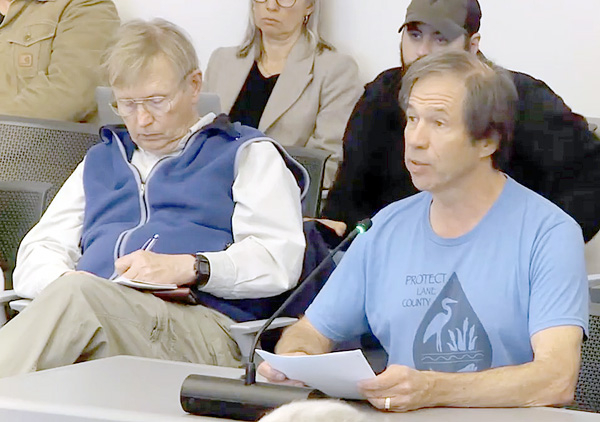
EUGENE: The Eugene Water & Electric Board spent hours listening to public testimony at its March 3 meeting. After each commissioner commented on a controversial ballot measure, they voted unanimously to oppose the proposed Watershed Bill of Rights.
The meeting was dominated by discussions of Ballot Measure 20-373, which would establish legal rights for local watersheds. Nine community members testified in support of the measure, urging stronger environmental protections and greater accountability for polluters.
Supporters argued the measure would provide long-term safeguards for water resources and help address emerging concerns such as industrial water use and corporate pollution. Critics of the proposal, including EWEB commissioners, raised concerns about the measure’s broad language and its potential for costly litigation that could impact both utility operations and ratepayers.
Doug Meyers, a Bethel neighborhood resident, phoned in to criticize EWEB’s proposed opposition, saying the utility had “failed spectacularly to communicate with me” to explain how its position would protect watersheds.
Others, including Rob Dickinson, argued EWEB had not provided specific examples of projects that would be negatively affected, despite repeated requests. He wondered about how the measure might impact the utility’s plans to remove the Leaburg Dam/
“Our legal advisors believe recognizing watershed rights could strengthen the case for removal because it benefits river health and the species that depend on it,” he said.
The public comment period also included allegations of potential conflicts of interest. Speaker Nick Squires questioned Commissioner John Barofsky’s impartiality. Squires cited timber industry campaign contributions to his campaign for the Eugene city council and his campaign treasurer’s connections to the Protect Our County political action committee formed to oppose the Watershed Bill of Rights ballot measure.
Barofsky denied any influence, stating his decision was based solely on his review of the measure and his role as an EWEB commissioner.
All five commissioners emphasized their opposition was not to watershed protection itself, but to the uncertainty they believe the measure would create.
Commissioner Sonya Carlson said she’d spent the last “ten years on this board to help protect the watershed for the community we share.” She cited meetings with both supporters and opponents before making her decision on the proposal posed. Carlson said as it stands, the proposal still has “real big problems,” particularly the risk of increased legal challenges that would “line the pockets of lawyers” and create higher costs for customers.
Commissioner Tim Morris echoed those concerns, warning that the measure could delay projects and drive up rates.
Mindy Schlossberg gained nodes of approval from other commissioners when she said, “I would love to see another iteration (of the ballot measure) written in conjunction with people who work on the watershed.”.
Following those discussions, the board voted unanimously to approve Resolution 2607 opposing the measure.
In other business, the board reviewed a major contract for work on the Carmen-Smith Hydroelectric Project.
Lisa Krentz, the utility’s generation manager, presented a significant contract increase for Jacobs (formerly CH2M Hill) related to Carmen Smith engineering services. Details included $4.55 million for ongoing work plus an additional $3.6 million for a revised trap and haul facility location and other projects.
The expansion, Krentz said, resulted from FERC dam safety requirements and protected species regulations, including sinkhole discoveries at the Trailbridge Reservoir that required design revisions.
Board president John Brown expressed concerns about cost escalation and the need for competitive pricing, while acknowledging the work on the project was in an advanced stage that would make cancellation impractical.
Author