Upriver District Pushes to Close a 50-Minute EMS Gap
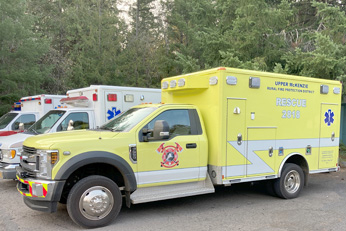
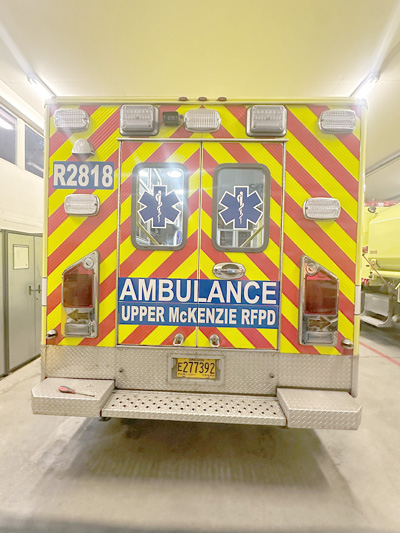
McKENZIE BRIDGE: For nearly 20 years, ambulance service boundaries in Lane County have remained largely unchanged, with no new provider requests altering the system. But that stability was disrupted in 2024, when the Upper McKenzie Rural Fire Protection District began asking a pressing question: how to improve emergency medical response in a rural community where help can be far away.
Fire Chief Joel Zeni said the effort is rooted in a long-standing challenge in the Upper McKenzie Valley – distance.
Before formal emergency medical systems were established in the region, residents relied on a volunteer group known as Emergency Action Services McKenzie, or E.A.S.E., to provide immediate care until outside responders could arrive. That same spirit of local response eventually became part of the Upper McKenzie Rural Fire Protection District, but the geography hasn’t changed.
Today, ambulance transport times in the Upper McKenzie area average nearly 50 minutes from the moment a 911 call is placed, according to the district. In critical emergencies, those delays can prove life-threatening.
In response, the district has spent the past two years developing a plan aimed at reducing those times without replacing existing ambulance providers. The proposal centers on using a locally based, volunteer-staffed Basic Life Support ambulance to move patients closer to advanced care – either by meeting an incoming ambulance or transporting them to a helicopter landing zone.
The effort gained momentum with the donation of a 2019 ambulance from Jacqueline Giustina, given, Zeni said, “so others may live.”
Turning that concept into reality, however, has required navigating a complex regulatory process.
The district began seeking licensure through the Oregon Health Authority in July 2025, while also coordinating with Lane County and Eugene-Springfield Fire, which oversees the region’s designated Ambulance Service Area. Initially, officials were told a letter of approval from Lane County was required before the state could conduct an inspection. Despite multiple meetings, that approval was not granted.
A change in state regulations at the start of 2026 removed that requirement, allowing the district to proceed. On Feb. 17, Upper McKenzie completed its inspection, covering facilities, protocols and personnel. A complaint related to earlier emergency patient movements briefly delayed the process, but on March 31, the district received its ambulance provider license.
Even with state approval, a key barrier remains.
Under current Lane County code, the district cannot operate its ambulance locally because the area falls within an existing Ambulance Service Area assigned to another provider. District officials say they have been working since 2024 to resolve the issue and recently submitted a third proposal to amend county code to allow limited operations.
As discussions continue, the district is urging community members to stay engaged and participate in public meetings, emphasizing that any changes will require coordination with county leaders and Eugene-Springfield Fire.
Zeni said the goal is not to overhaul the current system, but to strengthen it in a way that reflects the realities of rural response times.
“This is not about changing the entire system,” he said. “It’s about making sure the system works when it matters most.”
For communities along the Upper McKenzie, the question now is whether local initiative and county policy can align – and whether faster access to care can be brought closer to home.
Author