Preparing for a Challenging Fire Season
MCKENZIE BRIDGE: With signs pointing to an early and potentially severe wildfire season, the McKenzie River Ranger District is ramping up staffing, equipment and suppression strategies to meet growing risks across the upper McKenzie area.
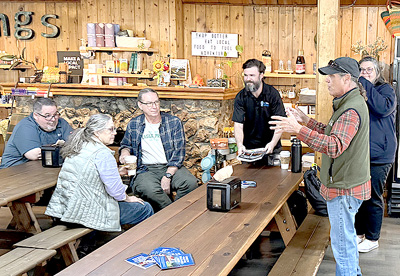
That update came during an April 7 “Locals Helping Locals” coffee gathering at the Obsidian Grill, where federal, state and county officials shared progress on wildfire preparedness and long-term planning across Lane County.
Dan Trapanese, fire management officer for the McKenzie River Ranger District, said the district is entering the 2026 fire season fully staffed and ready, despite lingering challenges from the loss of its warehouse facility in last year’s fire.
Crew 101, he said, will be staffed with 22 firefighters this season, supported by fully staffed Type 4 engines and a fuels program with three qualified personnel. While core staffing and equipment are in place, Trapanese noted that day-to-day operations continue to be complicated by the lack of storage space for tools and supplies.
“We have the people and the equipment we need for initial attack,” he said, “but the loss of infrastructure still affects how efficiently we can operate.”
More concerning, however, are the environmental conditions shaping up across the region. Trapanese reported that access to Carpenter Mountain Lookout was open in March – months earlier than normal this year – an indicator of an unusually low snowpack. Combined with below-average rainfall, the conditions suggest a longer and more dangerous fire season ahead.
“These are the kinds of indicators we watch closely,” he said. “When snowpack is this low and fuels are already drying out, it changes how early fires can start and how fast they can spread.”
In response, the Forest Service is adopting a more aggressive suppression posture, including in wilderness areas where firefighting tactics have historically been more limited. Trapanese cited recent fires that required heavier personnel deployment than typically allowed under the Wilderness Act, reflecting what he called “a shift toward quicker, more decisive action.”
Additional regional and national resources are also expected to bolster local responses, including increased aircraft availability and faster mobilization on emerging incidents.
“We’re seeing more support earlier in the season,” he said. “That helps us keep fires small, which is always the goal.”
While the ranger district’s efforts were a focal point of the discussion, the meeting also highlighted broader coordination across agencies working to reduce wildfire risk.
Brendan J. Irsfeld, Lane County’s emergency coordinator, described ongoing work to finalize a countywide wildfire risk reduction plan that reflects the distinct needs of different regions, including the McKenzie Valley. The plan, he said, emphasizes practical, near-term actions and stronger alignment between local, state and federal partners.
State Fire Marshal regional coordinator Kelsey Scandle echoed that sentiment, noting that Lane County’s planning process is emerging as a model for other regions “due to its emphasis on regional collaboration and actionable strategies.”
Discussions also touched on utility preparedness, evacuation challenges and the development of “resilience hubs”-hardened community sites that could provide refuge during disasters when evacuation is not possible.
Still, the clearest message of the morning came from the McKenzie River Ranger District: conditions are changing, and preparation is critical.
“With the kind of weather patterns we’re seeing, we have to be ready earlier and stay ready longer,” Trapanese said. “Our priority is always the same-protecting lives, communities and the people out there doing the work.”
Author