$6.4 Million Effort to Reconnect South Fork Floodplain Begins
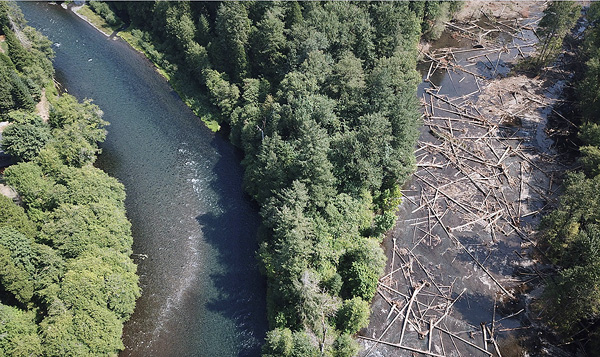
A major river restoration effort is set to begin on May 1st along the South Fork McKenzie River, launching a multi-agency project aimed at improving water quality, restoring fish habitat, and strengthening the river system’s long-term resilience.
Led by the US Forest Service in partnership with the McKenzie Watershed Council, Eugene Water & Electric Board, and McKenzie River Trust, the Lower South Fork McKenzie River Valley Reconnection Project – Phase 3, builds on more than a decade of restoration work in the McKenzie basin.
The project will focus on a 1.8-mile stretch of river upstream of Blue River along Forest Service Road 19, where a broad alluvial valley supports habitat for spring Chinook salmon, bull trout, and other native species. Crews will work to reconnect more than 335 acres of historic floodplain that have become separated from the river over time.
Decades of land use changes, flood control efforts, and the influence of Cougar Dam have altered the South Fork McKenzie River, causing water to move faster, reducing habitat complexity, and limiting the river’s natural ability to store water during heavy rains.
Organizers say the project will use a “Stage 0 Floodplain Restoration” approach – a process-based method that restores natural river functions. Crews will redistribute sediment, place large wood in the channel, and reopen side channels, allowing the river to spread across its floodplain and slow its flow.
“This work is about restoring the river’s ability to take care of itself,” said Lara Colley, floodplain restoration projects manager with the McKenzie Watershed Council. “We’re working with natural processes to rebuild habitat and improve conditions for fish and wildlife over the long term.”
“Investing in watershed restoration helps protect the quality and reliability of our community’s drinking water,” said Susan Fricke of EWEB. “Projects like this are smart, long-term investments in both environmental and community health.”
In addition to water quality improvements, the project is expected to enhance habitat for threatened and endangered species and increase the river system’s resilience to wildfire and climate-related impacts.
The $6.4 million project is being funded through a mix of federal, state, and local sources, including support from the National Oceanic and Atmospheric Administration and the Oregon Watershed Enhancement Board.
It’s part of a larger effort to restore floodplain connectivity throughout the Middle McKenzie River system, where several similar projects have already been completed, with more planned in the coming years.
“The scale of this work reflects the strength of our partnerships,” said Darren Cross, McKenzie River District Ranger. “By working together, we’re able to restore entire river systems in ways that wouldn’t be possible individually.”
Preliminary work, including vegetation clearing and staging, is already underway. In-water construction is expected to begin in June, with work continuing through the summer and completion anticipated in early September.
Residents and visitors can expect increased activity in the area, including heavy equipment and temporary access changes. Project partners say efforts are being made to minimize impacts and ensure public safety.
Additional updates and opportunities for community involvement are expected to be updated in the coming weeks.
Author