From Hand-Dug Poles to Modern Grid: Coop Powers Forward
Lane Electric takes on expanded service areas
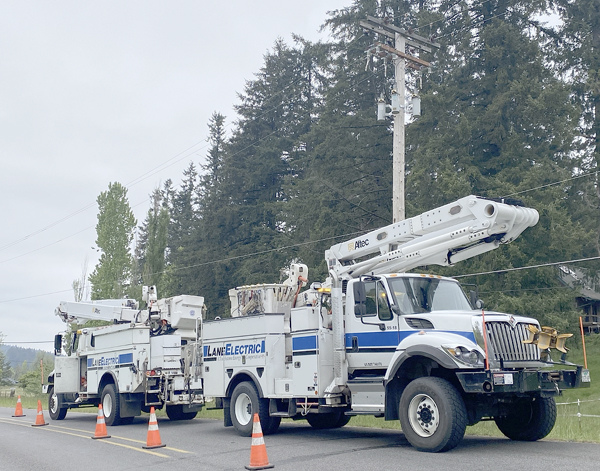
The story of the Lane Electric Cooperative is rooted in the grit and determination of rural Oregonians who, nearly a century ago, refused to accept life without electricity.
Today, the member-owned utility serves nearly 13,000 electric accounts across 1,479 miles of power line in Lane County, including much of the McKenzie River Valley. But its beginnings trace back to a time when power lines stopped short of rural communities, leaving farms and homes in darkness.
In the 1920s and early 1930s, rural life in Oregon-and across the nation-was marked by hardship. The Great Depression deepened economic struggles, and electricity remained out of reach for most rural residents. Private utility companies saw little financial incentive to extend service into sparsely populated areas.
That began to change in 1935, when President Franklin D. Roosevelt established the Rural Electrification Administration (REA), a federal initiative designed to bring electricity to rural America through low-interest loans and cooperative organization.
While the federal government provided the framework, it was local residents who made electrification a reality.
On May 17, 1939, nine men gathered at the home of Harvey Cooley in the McKenzie River Valley and formally established the Lane Electric Cooperative. Their goal was simple but ambitious: bring affordable, reliable electricity to their neighbors.
The early work was labor-intensive and community-driven. Loggers, farmers and homeowners cleared brush, set poles, and strung wire across rugged terrain. As lines stretched across forests and fields, electric lights began appearing in homes that had never known them.
The association was founded as a not-for-profit, member-owned cooperative-a model that ensured people and businesses receiving the service also had a voice in how it was run.
From its modest beginnings, Lane Electric expanded steadily through the mid-20th century. The cooperative now serves a territory spanning roughly 2,600 square miles, from the Cascade foothills toward the southern Willamette Valley.
It is one of 18 rural electric cooperatives in Oregon and a member of both the National Rural Electric Cooperative Association, which represents about 850 cooperatives serving 36 million people nationwide, and the Oregon Rural Electric Cooperative Association.
Lane Electric has operated as a tax-exempt 501(c)(12) cooperative since 1944, reflecting its mission to provide service for the mutual benefit of its members rather than for profit.
That mission continues to evolve. At midnight on May 1 Lane Electric welcomed 2,500 new member-owners from the lower McKenzie, who had been served by the Eugene Water & Electric Board (EWEB).
The transition, made possible through an asset purchase and sale agreement between the two utilities, aims to unify electric service along the McKenzie River from the Thurston Road and Camp Creek areas to Vida under a single provider.
According to Lane Electric officials, customers will see little immediate change beyond billing and service operations. The existing infrastructure will remain in place, ensuring continuity of service.
Looking ahead, Lane Electric is developing a 10-year capital plan for the newly expanded service area, with a focus on reliability and wildfire resilience-an issue of particular importance in the McKenzie Valley following recent fire seasons.
About half of the cooperative’s system is already underground, and officials say they will continue evaluating where additional undergrounding could reduce outages or fire risk. Other planned upgrades include replacing aging poles and transformers, installing covered or insulated lines, and improving system redundancy so electricity can be routed from multiple directions during outages.
Critical infrastructure-such as the area’s two fish hatcheries, water systems, and wildlife facilities-will also be prioritized in long-term planning.
From neighbors digging post holes in 1939 to modern infrastructure planning in 2026, Lane Electric’s history reflects a consistent theme: local people working together to solve local challenges.
What began as a grassroots effort to bring “the electric” to rural homes has grown into a regional utility-yet it remains grounded in the cooperative principles that shaped its founding.
Author