New Network Helps Protect Animals During Disasters
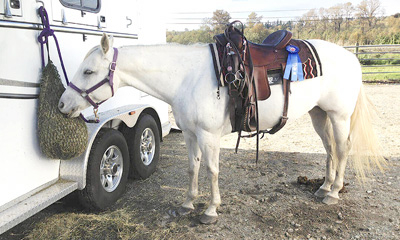
RAINBOW: The challenges livestock owners faced during Oregon’s devastating 2020 wildfire season inspired the creation of a new statewide emergency response organization aimed at helping animals and their owners during disasters.
Speaking at the 2026 Disaster Preparedness Fair, Karla Hogan, president of the Oregon Horse Council, outlined the mission and growth of the Oregon Livestock Council (OLC), an all-volunteer organization formed roughly two and a half years ago in response to evacuation problems exposed during the fires.
Hogan said she and her husband already had experience with technical large animal emergency rescue training when the 2020 fires forced them to evacuate 20 horses in the middle of the night with little communication from emergency management agencies.
“We spent eight hours evacuating horses under emergency conditions,” Hogan explained, describing the experience that led to the organization’s creation.
The Oregon Livestock Council was designed to fill the gap between what livestock owners can do on their own and what local governments are equipped to provide during large-scale emergencies. The organization assists with evacuations, temporary emergency sheltering, preparedness events, and technical rescue operations involving large animals.
The organization’s 18-member board includes representatives from a wide variety of livestock and emergency response groups. According to Hogan, the board includes members connected to horses, poultry, rabbits, guinea pigs, bees, and emus, as well as representatives from tribal communities, the Oregon Humane Society, veterinarians, and disaster-response organizations.
OLC operates entirely through volunteers and relies on grants and donations to fund equipment and operations. Hogan said the organization participates in numerous emergency response networks, including county and statewide disaster preparedness systems.
One of the organization’s key principles is that volunteers do not self-deploy during emergencies. Hogan stressed that OLC only responds when officially requested by county emergency management agencies or other authorized officials.
She cited an incident in Harrisburg where social media calls for help resulted in more than 60 livestock trailers arriving to assist with only about 30 horses. The uncoordinated response created severe traffic congestion that interfered with firefighters and law enforcement personnel trying to access the emergency area.
To avoid such confusion, OLC uses standardized equipment, marked vehicles, volunteer identification systems, and organized deployment procedures.
The council provides several services beyond evacuation assistance, including temporary sheltering, feed and supply coordination, and technical rescues involving trapped or injured livestock. Hogan emphasized that livestock owners remain primarily responsible for their animals, with OLC serving as backup support during emergencies.
Volunteers undergo extensive training before participating in emergency operations. Requirements include background checks, first aid and CPR certification, bloodborne pathogen training, FEMA disaster courses, and specialized animal evacuation training. Technical rescue responders receive additional operational-level certification.
Hogan also highlighted what she described as the nation’s first Livestock Pre-Registration Program. The system allows livestock owners across Oregon to pre-register information about their animals, trailers, and special evacuation needs using QR codes. During disasters, the organization can contact registered owners in threatened areas to determine who needs assistance.
The organization’s long-term equipment plan centers on large “response pods” valued at approximately $260,000 each. Hogan said OLC hopes to eventually place eight to 10 pods around Oregon so emergency resources can reach any area of the state within several hours.
Each pod would include multiple specialized trailers, including a climate-controlled command center and shelter unit, evacuation trailers stocked with portable corral panels, and technical rescue equipment.
Hogan also offered practical barn safety and evacuation planning advice for livestock owners. Recommendations included avoiding hay storage inside barns, reducing ignition sources, maintaining clear aisles for emergency access, and routinely removing spider webs and dust buildup due to their flammability.
She encouraged livestock owners to develop multiple evacuation plans and regularly practice loading animals under varying conditions so both animals and handlers are prepared during emergencies. Hogan noted that horses are highly sensitive to human emotions and can detect anxiety from considerable distances.
Preparedness recommendations also included maintaining barn records, storing at least two weeks of food and water supplies, preparing emergency go-kits, ensuring animals have proper identification, and establishing communication plans with neighbors and family members.
Hogan strongly warned against releasing livestock to roam freely during evacuations, saying loose animals create major dangers for first responders and motorists alike. She recalled one incident involving a loose 4-H bull that severely damaged a truck after escaping during an emergency.
Author