Peanut Butter, Flashlights and Fire Starters
Emergency Supplies Can Make the Difference During A Disaster
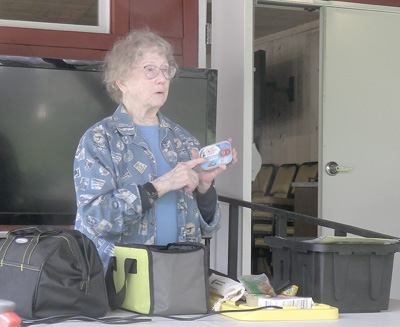
RAINBOW: Katya Davis, of OSU Extension, delivered a comprehensive presentation on emergency preparedness and survival supplies, focusing on food storage, equipment, and essential survival skills during the recent Disaster Preparedness Fair. The presentation covered multiple aspects of emergency preparedness, from basic nutrition needs during emergencies to advanced survival techniques.
Davis included discussions of emergency food supplies, emphasizing the importance of taking notice of fat intake by day four of an emergency situation. Coconut oil and olive oil are recommended as essential fat sources, along with tuna fish packets for protein. She also suggested carrying crackers and noted leaving a large jar of peanut butter at home to avoid weight. The canned goods she showed featured flip-top lids to eliminate the need for can openers, which take up valuable space.
Her food preparation section included various options for sustenance during emergencies. Davis discussed cocoa and granola (though someone had eaten her granola supply), oatmeal packets requiring hot water, and the use of small butane burners for cooking. She said one burner with one canister of butane provides sufficient fuel for steam canning operations, including making jam and processing tomatoes.
Beverage options were extensively covered, with Davis noting that people become bored with limited drink choices. She recommended crystalline cranberry drinks, emergency seed packets, and electrolyte packets for when people feel “puny.” Hand sanitizer was identified as essential, along with treats like granola or trail mix with chocolate chips. Davis mentioned having lifesavers for ten years in the same bag, though like her granola, someone had eaten her chocolate supplies.
Hot beverage preparation included teabags and instant coffee, with Davis expressing preference for “graniteware cups available at St. Vinnie’s for one dollar versus six dollars at BiMart.” For enhanced meal variety, she recommended small containers with tiny vials for spices – including white pepper, soy sauce, and paprika to combat the boredom of plain rice and noodles.
Equipment and tools formed a significant portion of the presentation. Davis demonstrated various lighting solutions, including solar-powered lights requiring no batteries that can charge under plant lights, featuring three functions including flashing capabilities and phone charging ports. She also showed rechargeable flashlights with LED technology and multiple signal functions, along with inexpensive tea candles that can provide cooking heat when used with bricks as a makeshift stove.
Featured safety and first aid equipment included headlights, first aid kits costing approximately thirty dollars from AAA, and N95 masks for smoke protection. Davis emphasized keeping flashlights in every room due to unpredictable power outages from utility work or accidents.
Her emergency shelter and warmth solutions featured Mylar sleeping bags costing about five dollars each, which reflect body heat and provide protection in Oregon’s climate conditions. Mylar blankets were mentioned as giveaway items useful for creating temporary shelters with rope. Hand warmers that can stay warm for about eight hours, she noted, were recommended, along with rechargeable versions that generate enough heat to make tea.
Fire-starting capabilities included waterproof matches in protective cases, veneer chips for kindling, Vaseline-coated cotton for quick ignition, commercial fire starters, shredded paper, and even dryer lint. Davis demonstrated that magnifying glasses can start fires on sunny days, recalling her own childhood experiences with fire-starting in vacant lots.
Personal safety and navigation tools encompassed cutting implements advertised to cut through pennies, multi-tools with pliers, sharp stainless steel knives for fish cleaning, fishing line, and safety pins for potential fishing activities. Davis also recommended having leather gloves, hard hats, and boots, plus knee pads for navigating debris and broken glass during earthquakes.
Hygiene and sanitation supplies could include bandanas, soap leaves for hand washing, expandable washcloths that look like pills, and environmentally-friendly detergent without phosphates for stream washing. Navigation and signaling equipment that were featured included compasses, whistles for continuous signaling when unable to yell, mirrors for helicopter signaling, and flashlights for emergency communication.
Water purification methods included LifeStraws, eyedroppers from a drugstore children’s sections, and a battery-powered sterilization device using blue light that requires one minute per glass of water. Davis said she preferred the LifeStraws over the sterilization device due to efficiency concerns.
The presentation concluded with information about a Eugene store selling freeze-dried items and freeze dryers, though Davis again found BiMart to be more cost-effective for most supplies. Additional items mentioned included dental floss for fishing, toilet paper, hand wipes, pickle buckets with kitty litter for sanitation, plastic bag systems for waste disposal, waterless cleaning products and hand sanitizer for pre-meal hygiene.
Author