McKenzie Spared as Oregon Wildfires Set Record
Lightning sparked several local fires, but none developed into major incidents
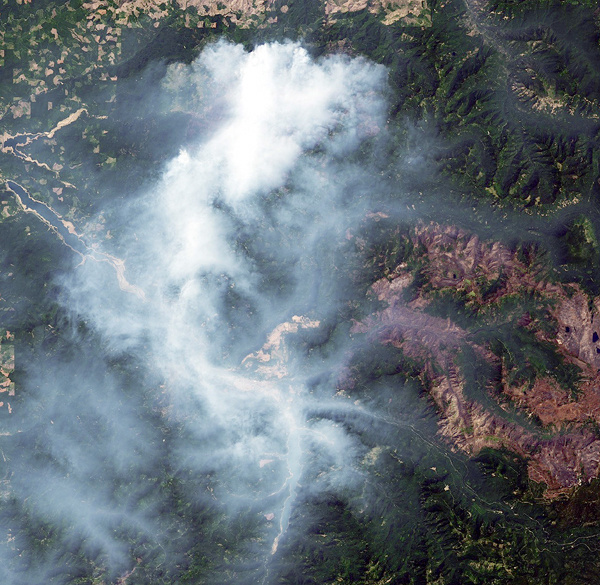
More than 2.1 million acres burned statewide in 2026, while the McKenzie River Valley largely escaped major wildfires Although Oregon saw fewer wildfires in 2026 than in recent years, the season still set a new statewide record for acreage burned, with more than 2.1 million acres scorched. The destruction was widespread.
Statewide, 1,813 wildfires were reported, according to the Oregon Department of Forestry (ODF), against an annual average of approximately 2,100 over the previous four years. The acreage burned nonetheless surpassed the previous record of 1.9 million acres, set in 2024, and some broader estimates put the total as high as 2.5 million acres. Grasslands and brush-covered areas, rather than heavily forested terrain, accounted for much of the burned acreage.
Across approximately 1.8 million acres, short grass was identified as the primary fuel, a demonstration of how quickly fires can spread through dry, open landscapes. An especially dangerous fire season resulted from the combination of record-low winter snowpack, drought conditions and widespread lightning storms.
Mountain snowpack stood nearly 30 percent below the previous record low, established in 2015, as Oregon entered the summer, and the lack of snowmelt contributed to dry conditions that persisted through the summer. Numerous fires were ignited by two major lightning storms, which forced firefighting agencies to divide personnel and equipment among multiple emergencies.
The McKenzie River Valley, despite the severe statewide conditions, experienced relatively limited wildfire activity. Several lightning-caused fires in the surrounding national forest drew responses from firefighters, but none developed into the large, destructive incidents seen elsewhere in Oregon. Following thunderstorms in July, a wildfire designated Fire No. 222 was discovered approximately two miles west of Fuji Mountain on the McKenzie River Ranger District. Firefighters contained the blaze at approximately one-quarter acre. No additional smoke or new fire starts beyond those already identified were found on a subsequent aerial reconnaissance flight.
A second wildfire, designated Incident No. 241, burned within the McKenzie River Ranger District in the Three Sisters Wilderness. The U.S. Forest Service reported the fire extinguished by early August. Firefighting equipment was retrieved from the remote location using a Black Hawk helicopter based at the McKenzie Bridge Airport.
During an active thunderstorm on September 5, the Upper McKenzie Fire District received a report of a possible forest fire near the 54000 block of McKenzie Highway. The caller estimated the fire at less than one acre and described seeing flames and smoke approximately two miles away. That report’s final disposition was not established.
Agencies outside the valley also received help from local firefighting personnel. Among those responding to a 16-acre grass fire in southeast Springfield, which prompted evacuation notices for nearby residents, were firefighters from the Upper McKenzie Fire District. Months earlier, concerns about the approaching fire season had surfaced.
McKenzie River Ranger District Fire Management Officer Dan Trapanese warned in April that unusually low snowpack, early access to higher elevations and below-average rainfall were creating potentially dangerous conditions. A 22-member firefighting crew, staffed engines and other suppression resources were prepared by the district to respond quickly to new fires. The valley avoided major wildfire losses, but the season reinforced the importance of early detection and rapid response in a region still recovering from the devastating 2020 Holiday Farm Fire.
Far more severe were the consequences elsewhere in Oregon. Large wildfires destroyed 56 homes statewide, according to the Northwest Interagency Coordination Center, and two men involved in firefighting operations lost their lives. Evacuation notices peaked on July 27, when more than 32,000 Oregon residents were under evacuation advisories or orders; 6,344 of them faced Level 3 orders requiring immediate evacuation.
The Warm Springs Reservation in Central Oregon ranked among the hardest-hit areas, where at least six homes were destroyed by the Bench Fire, which also disrupted electricity, water supplies and transportation. Tribal officials warned that consequences extending well beyond the immediate emergency would follow from the loss of timber, wildlife habitat and traditional food sources.
Near Mount Hood, the Grasshopper Fire burned for months after a July lightning strike, destroying at least six homes and numerous other structures.
Tragedy also came to firefighting crews during the season. Jason Ensign of Klamath Falls died at the Wrights Spring Fire in Southern Oregon when flames overtook his position while he was operating a bulldozer. Wildland firefighter Jesús Eduardo Olimpo Gutiérrez Toral, 25, died from injuries suffered while removing hazardous trees at the Austin Fire near Mount Hood.
Communities throughout Oregon were affected by smoke from the fires, and the Department of Environmental Quality reported increased numbers of unhealthy air days in nearly every region. Outdoor activities were disrupted by heavy smoke during August, which also contributed to additional hospital visits.
The financial toll was unprecedented as well. By mid-August, state firefighting costs had exceeded $235 million, ODF reported, already surpassing the previous record set in 2024. Broader estimates that incorporate firefighting expenditures across multiple agencies and jurisdictions have reached as high as $1.4 billion, although those figures represent different accounting categories and should not be directly compared.
In September, the growing expenses prompted the Oregon Legislature’s Joint Emergency Board to approve $123 million in additional wildfire funding, including $108 million for ODF and $15 million for the Oregon State Fire Marshal. To cover expenses through the end of the year, the forestry department also pursued plans to borrow $150 million from the Oregon State Treasury.
As the 2026 fire season winds down, attention is shifting toward reducing the risk of another destructive summer. Millions of dollars in grants will support wildfire prevention projects that ODF plans to carry out during the cooler months, with work including hazardous vegetation removal and forest thinning across thousands of acres. The extensive acreage that burned in grass and brush during 2026, however, also highlights the importance of managing wildfire hazards beyond forested areas.
In some communities, fuel reduction projects remain controversial, with debate continuing over their effectiveness, environmental consequences and costs. A warmer winter associated with a strong El Niño weather pattern is another concern. Oregon State Climatologist Larry O’Neill has cautioned that more winter precipitation could fall as rain rather than snow, potentially leaving mountain snowpack inadequate for the following summer.
Conditions for 2027 remain uncertain, but the record-setting 2026 season demonstrated that fewer wildfire starts do not necessarily mean less destruction.
For McKenzie River Valley residents, the relatively quiet local fire season provided a welcome contrast to the devastation elsewhere in Oregon. Memories of the Holiday Farm Fire are still fresh, however, and the importance of maintaining firefighting resources, preparing homes and reducing wildfire hazards remains clear.
Author