Congresswoman Floats the River, Continues Fight for Hatchery Funding
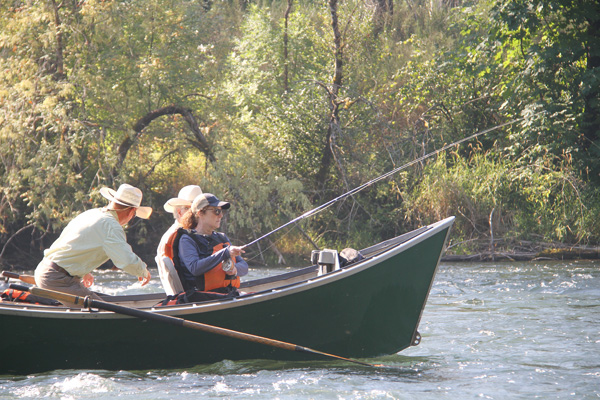
LEABURG: On the McKenzie River last Friday, Congresswoman Val Hoyle pledged continued support for the fight to protect the future of hatchery fish and recreation on one of Oregon’s most iconic rivers.
Hoyle’s day began with members of the McKenzie River Guides Association (MRGA), the Northwest Sportfishing Industry Association (NSIA), and the McKenzie River Discovery Center (MRDC) for a site visit at the Old McKenzie Fish Hatchery.
“This river is unlike any other,” according to Steve Mealey, vice president of the MRDC. “Its waters come from an underground aquifer so vast it holds as much water as Lake Mead three times over. A third or more of Portland’s summer Willamette River water flows from here, at a steady 38 degrees at its origin year-round. That’s what makes the McKenzie so special – and why we have to protect it.”
Mealey outlined the center’s vision: three exhibit wings highlighting the river and watershed, fish and ecology, and the legendary McKenzie boats and guides. Working with the Oregon Museum of Science and Industry (OMSI), the center aims to become a world-class destination where visitors can learn, reflect, and connect.
Educating the public is urgent, he said. Key concerns include the Oregon Dept. of Fish & Wildlife operations, which for decades produced more than 277,000 pounds of trout and tens of thousands of Chinook and steelhead smolts each year. The U.S. Army Corps of Engineers (USACE) announced deeper cuts last year that fund hatchery operations which would slash trout production by 65 percent, eliminate steelhead entirely, and sharply reduce salmon stocking.
Guides and conservationists say the cuts would violate federal mitigation promises dating back to dam construction in the Willamette Basin. “This isn’t just about fish-it’s about our culture, our economy, and our way of life on the McKenzie,” MRGA leaders told Hoyle.
Liz Hamilton, executive director of the Northwest Sportfishing Industry Association, described working with the Corps as “like going to a country where you don’t know the language.” She thanked Hoyle for pushing funding for the Willamette Hatchery, support backed by “two governors, four tribes, and more than 30 conservation groups.”
The congresswoman, who sits on the House Water, Wildlife, and Fisheries Subcommittee, and has signed multiple letters pressing USACE to restore full funding. “The McKenzie River is central to Oregon’s identity,” Hoyle said. “I’ll keep fighting to make sure these commitments are honored.” Following the meeting at the MRDC, Hoyle and staff joined their hosts on a river drift boat trip from Silver Creek to the Helfrich Landing where they flyfished and experienced Marten Rapids.
For local guides, the stakes are high. MRGA’s 145 members serve more than 1,000 clients a year, pumping an estimated quarter-million dollars into the river economy. Without robust hatchery programs, they warn, both jobs and traditions could be lost that are key to the McKenzie River area’s tourism supported economy.
After the river trip, one message was clear: the McKenzie’s future depends on whether Washington keeps its promises.
Author