McKenzie Salmon Spawning Survey is Underway
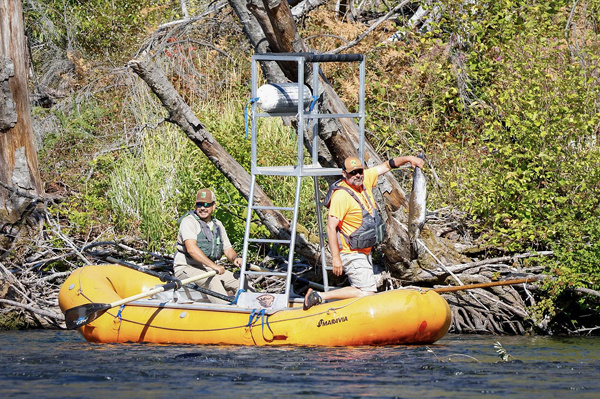
Oregon Dept. of Fish & Wildlife crews are conducting annual spawning-ground surveys, documenting redds – the gravel nests where salmon lay their eggs – and recovering carcasses from natural spawners. The carcasses are examined for fin clips, which identify hatchery fish, and samples also contribute to genetics and growth studies.
Historic data highlights the scope of this work. During surveys from August to October 2003, crews counted more than 140 redds and recovered over 140 carcasses in just two sections of the river. Above Leaburg Dam, only about a third of the carcasses showed hatchery marks, compared with 70 percent below the dam-evidence of how hatchery influence varies across the watershed.
More recent reports confirm that the work continues. A 2019 Willamette Basin survey, which included McKenzie tributaries such as Horse Creek and Lost Creek, documented redds and carcasses across multiple reaches. Between 2019 and 2022, ODFW and the U.S. Forest Service conducted additional surveys on the South Fork McKenzie, while Oregon State University researchers used carcass samples for genetic studies of natural-origin Chinook. A 2024 peer-reviewed paper reported on more than 600 carcass samples collected in the McKenzie system.
The surveys are also central to ODFW’s Hatchery and Genetic Management Plan (HGMP) for the McKenzie Spring Chinook program. The plan sets strict targets for limiting the number of hatchery fish spawning in the wild, particularly upstream of Cougar Dam, in order to safeguard the fitness and productivity of wild Chinook.In 2024 monitoring showed lower-than-expected Chinook returns to the McKenzie, prompting the closure of Chinook angling on July 8 to protect unexpectedly small runs.
Managing salmon carcasses play unique role in supporting the health of the McKenzie River ecosystem.
Some hatchery-origin Chinook carcasses are placed in spawning streams-including those in the McKenzie Basin – as part of a nutrient enrichment strategy. Biologists say the practice mimics the natural return of salmon, which historically provided food and nutrients for insects, birds, and other fish after their spawning runs.
These enrichment projects are tightly regulated. Carcasses must meet health and water-quality standards set by both ODFW and the Oregon Department of Environmental Quality. Fish pathology screenings, disease testing, and permit oversight ensure that only healthy carcasses are used and that potential risks to the river are minimized
Data gathered from carcasses reveals a lot about the balance between hatchery and wild fish. Recent studies suggest that even one generation of natural spawning can boost the fitness of Chinook compared to hatchery-origin fish-an encouraging signal for long-term recovery.
Author