New Review Has Implications for Blue River and Cougar Dams
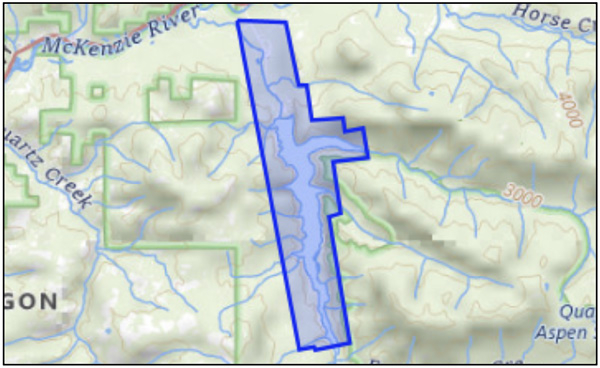
After six years of study, the U.S. Army Corps of Engineers has completed a sweeping environmental review of the Willamette Valley’s 13-dam system – but new federal requirements mean the work is far from over. A Supplemental Environmental Impact Statement (SEIS), set for release in early 2026, will revisit key operations across the system, with particular implications for the McKenzie River’s Blue River and Cougar dams.
The original Environmental Impact Statement (EIS), published in April 2025, was the first full systemwide review since 1980. It evaluates how the Corps’ operations affect communities, ecosystems, water quality, fish passage and other Congressionally authorized uses, including flood control, irrigation, hydropower and recreation.
But just before the EIS was finalized, two significant changes forced the Corps to reopen the analysis. Those additions – mandated by Congress and federal fisheries regulators – required a deeper look at operations valley-wide.
The most sweeping new requirement comes from the Water Resources Development Act of 2024, which directed the Corps to study a permanent end to hydropower production at certain Willamette Valley dams. While the agency has not yet identified which dams might be included, reactivating the McKenzie system’s Cougar Dam could be examined.
Ending federal hydropower operations would represent one of the largest operational shifts in the system’s history. The Corps says it cannot complete its overall operations review until it formally studies this option in the SEIS.
The second new requirement stems from a Biological Opinion issued by the National Marine Fisheries Service (NMFS), calling for a deeper fall drawdown of Detroit Reservoir to help endangered fish species. While Detroit Reservoir is outside the McKenzie, any large operational change in the Willamette system has the potential to ripple across interconnected dams, including Blue River and Cougar.
The Corps says it does not expect the deeper drawdown at Detroit to begin until fall 2026. The SEIS will analyze how such an action might affect water quality, downstream fish passage and nearby communities, while the Corps continues current fish-passage and water-quality measures.
Blue River and Cougar dams play a major role in McKenzie watershed management — regulating spring runoff, reducing flood risk for downstream communities, supporting recreation, and helping maintain water quality in one of Oregon’s most heavily used river systems.
Both dams are also central to ongoing efforts to protect threatened salmon and steelhead. Cougar in particular has undergone extensive operational modifications in recent years to improve downstream passage and temperature control — changes that the SEIS may revisit depending on systemwide needs.
A public comment period will run from November 14 to December 29. Officials say public feedback is crucial, especially from communities that rely on upstream dams like Blue River and Cougar for flood control, clean water, and recreation access.
Author