Meeting Highlights Rift Over Federal Forest Strategy
Fuel Breaks vs. Fire Behavior Questioned on 36,000-Acre Project
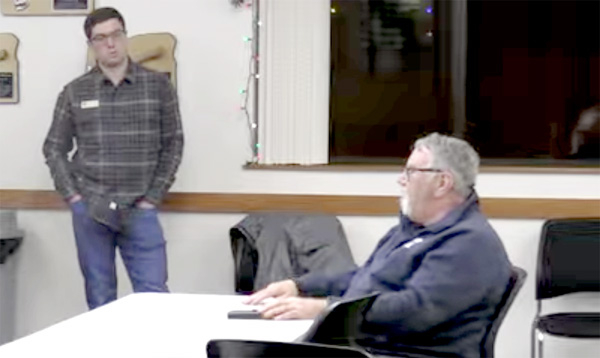
LEABURG: At a sparsely attended Deember. 4 public meeting, officials laid out plans for the Tie Project, a forest management and fuels-reduction effort spanning roughly 36,000 acres on the McKenzie River Ranger District. About 7,800 acres are proposed for active treatment, a scale that drew concern from several longtime residents, firefighters, and forestry professionals.
The project, developed in partnership with the Oregon Department of Forestry through the Good Neighbor Authority, is designed to reduce wildfire intensity, boost forest health, support local timber economies, and improve road access for firefighting and recreation. An environmental assessment for the project is targeted for fall 2025, with a draft ready this spring 2026.
Officials described two primary treatment methods: variable density thinning in previously managed stands, and shaded fuel breaks along major roadways – generally within 150 feet of the surface – designed to provide safer places for crews to work during major blazes. The work is expected to generate an estimated 120 million board feet of timber, with proceeds reinvested in restoration work.
But much of the meeting focused on if the scale of the work really would go far enough. Several people said the 2020 Holiday Farm Fire burned 37,000 acres in just 24 hours, arguing that thinning less than 8,000 acres within the project boundary would do little to prevent future large-scale fires. Creating wider fuel breaks was also encouraged, along with more post-fire salvage logging, and reopening decommissioned roads to improve access for firefighters.
Forest Service staff said their options are constrained by land allocations under the forest plan, which limits active management to about 40 percent of the district’s 580,000 acres. They noted that current regulations prohibit creating openings larger than three acres and restrict work in old-growth areas. Staffers also emphasized that shaded fuel breaks are not intended to stop wind-driven crown fires but to provide safer anchor and fallback positions for firefighters.
Road access was another flashpoint. While some residents said years of road closures have hampered fire response, Forest Service officials stated that a regional moratorium is currently in place on decommissioning system roads. Any temporary roads built for this project, according to McKenzie District Ranger Darren Cross, would be removed after use.
Economic impacts also surfaced repeatedly. Dana Burwell, a McKenzie School Board member, said declining timber revenues have left the district struggling, noting that private landowners salvaged and replanted quickly after the Holiday Farm Fire while federal lands remained largely untouched. Bob Zybach added that “limited federal harvesting contributes both to rural poverty and to the buildup of hazardous fuels.”
Kyle Sullivan-Astor, from the Oregon Dept. of Forestry’s Federal Forest Restoration Program, said the state is contributing funding, expertise, and staffing to help the Forest Service complete planning and implementation. He described ODF’s involvement as “additive” to federal capacity. Additional surveys, analysis, and public input will shape the final proposal over the next year, he said.
To view a video of the meeting, go to: tinyurl.com/4eedchrw
The Forest Service will accept public comments through December 26. They may be submitted at the district office, by mail to Jessica Reed, 57600 McKenzie Hwy, McKenzie Bridge, OR 97413, or online through the project website at: tinyurl.com/26he2ua7
Author