County Weighs Public Safety Funding, Waste System Challenges
Staffing Strains and Trash Troubles Took Center Stage at Commissioners’ Meeting
The Lane County Board of Commissioners devoted much of its December 9 meeting to two pressing issues: funding for public safety, particularly the district attorney’s office, and growing challenges within the county’s waste management system.
District Attorney Chris Parosa told commissioners his office is struggling to keep pace with rising caseloads and increasingly complex evidence, despite staffing levels that have remained largely unchanged for decades. The criminal division receives more than 6,500 case referrals each year and is staffed by 24 attorneys, along with five paralegals and four victim advocates.
In 2025, the office filed 4,840 cases – about 74 percent of all referrals – along with hundreds of probation violations, public records requests and expungements. Victim advocates provided nearly 28,000 services to about 3,500 victims, Parosa said.
He also noted that in the mid-1980s, the office employed more attorneys while serving a county population roughly 40 percent smaller than today. He said technological advances such as police body cameras have improved transparency and justice, but have also significantly increased the time required to review evidence and prepare cases.
To address the shortfall, Parosa requested funding for 10 additional deputy district attorneys, along with support staff, victim advocates and investigators. The estimated $5 million investment, he said, would allow the office to prosecute an additional 1,000 to 1,500 cases annually and help prevent burnout and turnover among prosecutors. Commissioners acknowledged the request as part of a broader conversation about strengthening the county’s public safety system.
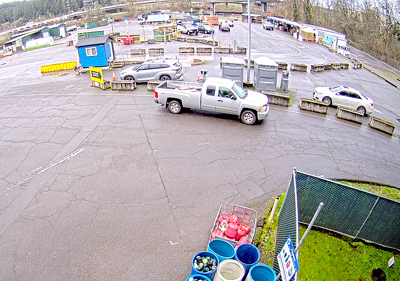
The board also turned their attention to waste management issues, like the future of the aging Glenwood transfer station. Waste Management Division Manager Jeff Orlandini and Public Works Director Dan Hurley presented findings from a recent analysis that explored options for replacing or reconfiguring the facility.
The study recommended separating recycling areas and different user types to improve efficiency and safety. Preliminary cost estimates for a new or significantly upgraded facility ranged from the mid-$30 million range to about $57.7 million. Alternatives such as building two smaller transfer stations or expanding existing sites were discussed but were considered to be less desirable.
Commissioners noted the Glenwood site’s central location while pointing to population growth and redevelopment in the area as creating constraints. Board Chair Heather Buch suggested working with the City of Springfield to explore creative solutions, including the possibility that the current site may no longer represent the highest and best use of the property.
A related and more immediate concern involved waste exports and the county’s system benefit fee, which funds transfer stations, recycling programs and hazardous waste services. Hurley and County Administrator Steve Mokrohisky reported that Waste Connections Inc., the parent company of Sanipac and EcoSort, has been exporting waste to its Dry Creek landfill near Medford without paying the required fee.
County officials estimate about 61,000 tons of material have been exported without fee payment, creating a significant revenue shortfall. Mokrohisky said the situation mirrors a 1999 crisis that led to the creation of the system benefit fee in the first place.
Despite fee increases totaling 11 percent over the past two years, revenue has remained flat while costs have risen, Hurley said. The shortfall threatens the county’s ability to maintain its waste management system and to fund future landfill development, including a new landfill cell needed by 2028.
The county is pursuing an intergovernmental agreement with the city of Springfield to enforce fee collection and is also considering legal options to recover unpaid fees. Commissioners asked for additional information on hauling rates and profit margins across jurisdictions to better inform future decisions.
Author