Wildfires, Prey Shifts, and Policy Battles Collide
Tracking, trapping and law: inside the response to problem cougars
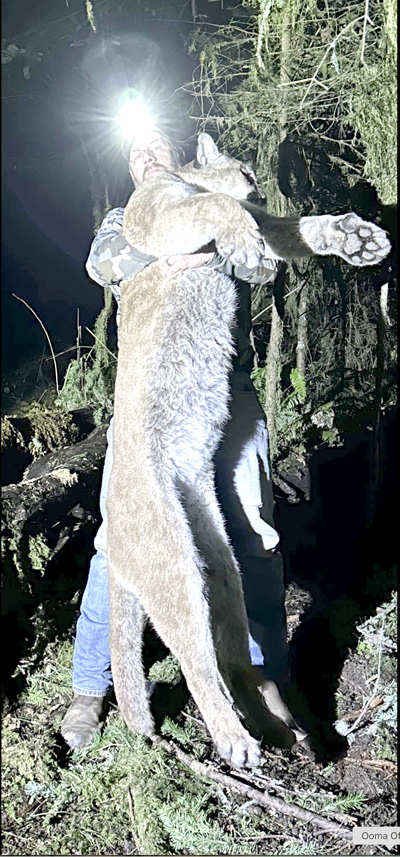
A recent cougar attack on a family dog has renewed concerns about growing encounters between people and large predators in parts of Oregon, highlighting long-running debates over wildlife policy, hunting regulations and public safety.
Eric Lee, a state contract trapper and wildlife response contractor, said a recent incident involving a family dog on West King Road reflects broader population pressures rather than an isolated incident. He estimates Oregon’s cougar population could be as high as 8,000 animals – well above a long-cited management target of roughly 3,300 – creating territorial competition that pushes younger cats into rural neighborhoods, hobby farms and residential edges where pets and livestock are easier prey.
Lee believes recent wildfires have also reshaped habitat in ways that benefit deer and elk, drawing more cougars into regenerating landscapes. As dominant adults defend territory, displaced juveniles may wander into human-occupied areas and lose their natural wariness of people.
Lee said he has euthanized 76 cougars within a 100-square-mile area surrounding his home, about half of his total career cases, and has documented dozens of unsuccessful response efforts tied to hundreds of livestock or pet losses across multiple properties.
Those incidents, he said, have occurred not only in remote settings but also near schools, churches and some residences within city limits – evidence, in his view, of a shift toward more frequent residential encounters.
In the recent upriver case, Lee described the cougar as a 120-pound male estimated to be between two and four years old. Because the location lay outside his immediate service range, he referred the response to wildlife specialist Tyler Tiller of Camp Creek, who tracked the animal for roughly a week and a half before it was captured following repeated trail-camera sightings.
Lee also pointed to the recent territorial fight between two cougars on Yale Lane in McKenzie Bridge that left an older female severely injured and requiring euthanasia – an event he considers another sign of mounting density pressures. All of his recent response cases, he added, have occurred at residential addresses, sometimes within a few dozen feet of homes.
Wildlife responses require coordination with agencies including the Oregon Department of Fish and Wildlife and the Oregon State Police, along with formal depredation reports and processing of captured animals for health checks and tagging.
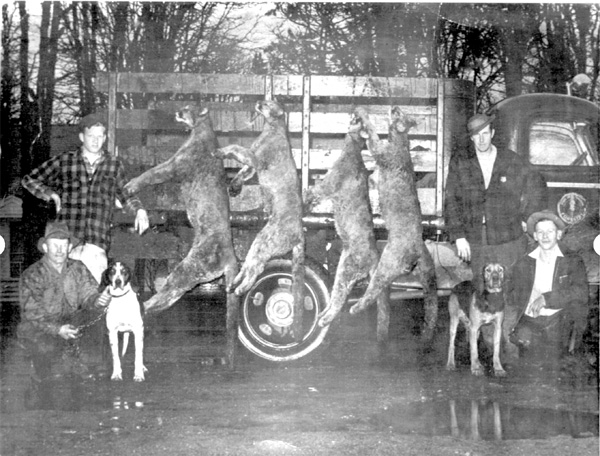
Cougar hunting has remained legal in Oregon for generations, but laws and management strategies have shifted significantly. Prior to the mid-1990s, cougars were first hunted for bounties and later managed as game animals, with hound hunting permitted until voters approved Ballot Measure 18 in 1994. The measure, which took effect in 1995, banned the use of dogs for sport hunting of cougars and bears, though hunting without dogs continues under state regulation and authorized agents may still use hounds in limited public-safety or livestock-protection situations.
Today, Oregon’s cougar population is generally estimated at more than 6,000 animals. Hunting is allowed year-round, and most cougars are taken incidentally by hunters pursuing deer or elk. A cougar tag costs $17 for residents and nonresidents, and hunters receive no bounty or direct payment – marking a sharp contrast with the Great Depression era, when pelts and state bounties provided meaningful income for rural families.
Also known as mountain lions, cougars are the second-largest cat species in North America. Adult males can reach about 8 feet in length and weigh 150 to more than 200 pounds, while females are smaller, typically 90 to 110 pounds. In the wild, cougars generally live 8 to 13 years.
The solitary predators occupy territories statewide, with the highest densities in mountainous, forested regions. Male home ranges can exceed 100 to 150 square miles, while females typically use smaller areas. Young dispersing cougars may travel long distances in search of territory, sometimes appearing near suburban communities. They are most active at dawn and dusk and closely follow prey such as deer and elk.
Efforts to overturn the 1994 ban on hound hunting – through ballot measures and legislation – have repeatedly failed, leaving current regulations in place amid continued disagreement between hunting advocates and animal-protection groups.
Through his business, The Cougar Guy LLC, Lee maintains an online alert network sharing sightings and safety information. He said his goal is education and prevention rather than unnecessary animal removal but argues predators must retain a natural fear of humans to reduce risk.
Lee described cougar management as a complex balance of public safety, wildlife conservation and political realities, emphasizing the importance of prompt depredation reporting and strict legal compliance. As communities expand into forested landscapes and predator numbers remain high, he expects human-cougar encounters to remain a persistent concern for rural and semi-rural residents across Oregon.
Author