Judge Keeps U.S. in Holiday Farm Fire Fight
Court Narrows – But Advances – Key Claims in Lawsuit
EUGENE: A federal judge has ruled that several major claims against the United States stemming from the 2020 Holiday Farm Fire may move forward, while dismissing others related to power line operations.
In his February 11 opinion, U.S. District Judge Mustafa T. Kasubhai partially denied the federal government’s motion to dismiss consolidated lawsuits tied to the devastating blaze that tore through the McKenzie River Valley.
The cases – including 21st Century Centennial Insurance Company versus the United States of America and several related suits – allege that the Bonneville Power Administration (BPA) played a role in igniting or worsening the fire.
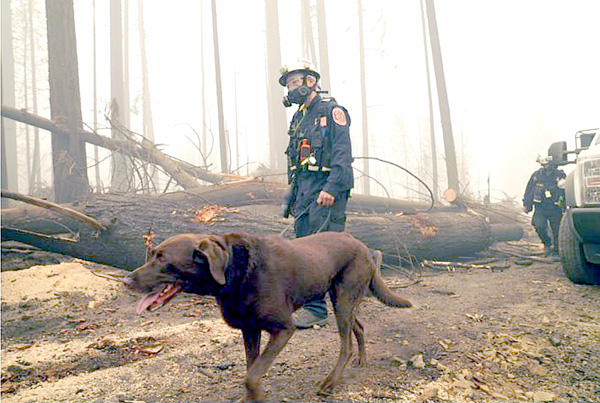
The Holiday Farm Fire began on September 7, 2020, during extreme wind and dry conditions that had been forecast by the National Weather Service. Two separate ignitions along Highway 126 merged into a blaze that burned more than 170,000 acres, destroyed over 700 structures, and claimed one life.
According U.S. Forest Service investigators, one ignition occurred near McKenzie Bridge after a tree fell onto a de-energized Eugene Water & Electric Board line, pushing it into an energized line owned by Lane Electric Cooperative and re-energized the EWEB line.
A second ignition point occurred about six miles west near milepost 41, where a tree fell onto the BPA’s Cougar-Holden transmission line. Electricity carried through the interconnected lines ignited vegetation, fueling the fire.
Multiple groups have filed suit, including fire survivors, property owners, and timber companies, as well as insurance carriers seeking reimbursement for claims paid to policyholders. The cases were consolidated in the U.S. District Court for the District of Oregon.
Complainants allege two key points led to negligence, trespass and nuisance. They say BPA failed to both identify and remove a hazardous “danger tree” near its transmission line, while also failing to properly manage the energization of its power lines during extreme fire weather conditions.
The federal government sought dismissal under the Federal Tort Claims Act, arguing it is shielded by the law’s “discretionary function exception,” which protects certain governmental decisions grounded in public policy from liability.
Judge Kasubhai applied a two-part legal test established by the U.S. Supreme Court in Berkovitz vs. United States to determine whether the exception applied.
In his 23-page opinion, Kasubhai drew a distinction between BPA’s vegetation management duties and its decisions regarding power line operations.
The court found that BPA’s policies governing identification and removal of “fall-into danger trees” were largely mandatory and technical in nature, rather than grounded in broader public policy considerations.
Because BPA crews were required to assess whether a tree had a 50% or greater likelihood of falling within five years and to remove qualifying trees under specified timelines, Kasubhai concluded that type of work resembled “routine maintenance – not discretionary policymaking.”
As a result, claims alleging BPA failed to identify or remove a hazardous tree will move forward.
“Immunizing the United States for standard maintenance of the sort here would run counter to the directive that courts should construe the FTCA’s waiver broadly and its exceptions narrowly,” the judge wrote.
However, Kasubhai dismissed with prejudice claims that the BPA should have de-energized its transmission lines or prevented them from re-energizing.
He wrote those decisions involved balancing competing goals such as reliability, safety and operational continuity under BPA’s Open Access Transmission Tariff and “Good Utility Practice” standards.
Because decisions like that are susceptible to public policy analysis – including concerns about maintaining electrical service – they fall within the discretionary function exception, Kasubhai ruled.
His decision narrows the scope of the litigation but allows significant negligence claims to proceed against the federal government.
The United States remains a defendant on claims related to vegetation management, while allegations tied to power shutoffs and energization decisions have been dismissed.
The consolidated cases will now proceed through further pretrial proceedings and a potential trial, unless they’re resolved through a settlement.
Author