Help Gone Sideways? State Alleges Misuse of Fire Recovery Funds
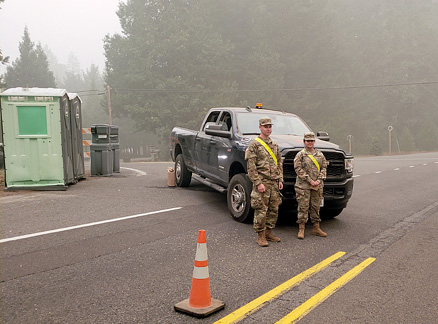
Along the McKenzie River, people remember who showed up when it mattered.
After the Holiday Farm Fire tore through the valley, help came in all shapes and sizes – neighbors with chainsaws, volunteers with pickup loads of supplies, and organizations promising to lend a hand when the road ahead looked mighty long.
Most of that help did what it was supposed to do.
But now, the State of Oregon says one of those efforts didn’t.
In a civil complaint filed this month, the Attorney General’s office alleges that Marcus Brooks, founder and director of the Cascade Relief Team (CRT) – a nonprofit formed in the wake of the 2020 wildfires – diverted $837,000 away from the very people it was meant to help.
According to the filing, the CRT received a $100,000 grant to help with cleanup work tied to several fires, including the Holiday Farm Fire – the one folks here know all too well.
That kind of work matters out here. Clearing debris, removing hazard trees – it’s not glamorous, but it’s the kind of activity that helped this place get back on its feet.
The state now says it can’t confirm whether a good slice of that work was ever done.
The complaint paints a picture that’s hard to square with the spirit of those early recovery days.
Investigators says hundreds of thousands of dollars in charitable funds were lost, wasted, or diverted.
Instead of going to fire survivors, the state alleges the money went toward things like $116,133 for travel, $6,000 for gambling, and much more for personal bills, and vehicles – expenses that don’t line up with helping a neighbor rebuild.
Like a lot of efforts that sprang up after the fire, the organization got its start during a time when people were hurting and willing to lend a hand however they could.
Donations came in, starting with $48,000 in 2020 and $941,587 in 2021. Contracts followed. For a while, it looked like another group was stepping up to help recovery efforts.
But the state says behind the scenes, there wasn’t much structure – no real board oversight, little recordkeeping, and one person in charge of it all.
By the fall of 2023, the operation had run out of money and quietly shut down, leaving workers without jobs and communities without the help they’d been promised.
The state is asking the court to dissolve the nonprofit, recover the missing funds, and asked that Brooks, its founder, be barred from handling charitable money in the future.
In the McKenzie area, recovery is still ongoing. Some homes are being rebuilt, others still remain in limbo. Plus, the forests are still growing back.
And the work – the real recovery work – continues.
Author