Oregon Focuses on CWD Testing
Oregon Focuses on CWD Testing Deer season brings increased wasting disease in neighboring states
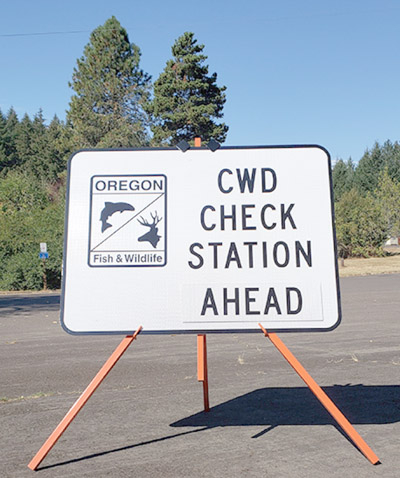
Oregon wildlife officials are asking deer and elk hunters to help monitor for chronic wasting disease as the state’s Any Legal Weapon deer seasons open Saturday, Oct. 3.
The Oregon Department of Fish and Wildlife is expanding its chronic wasting disease, or CWD, surveillance this hunting season, including operating check stations where hunters can have harvested deer and elk sampled.
Although CWD has been detected in neighboring Idaho, Washington and California, the disease has not been found in Oregon.
“Early detection is our best tool in reducing the disease’s impact on Oregon’s deer, elk, and moose populations,” said Ashley Reeder, ODFW’s CWD surveillance coordinator.
Successful deer and elk hunters are being asked to voluntarily submit samples for testing. However, hunters transporting harvested deer or elk are required to stop if they encounter an operating CWD check station along their route.
Sampling generally takes about 10 minutes and involves collecting lymph nodes and information from the hunter.
One check station will operate at the Oregon Department of Transportation weigh station off Highway 26 in Prineville from 9 a.m. to dusk Oct. 4-6 and again Oct. 31-Nov. 2. ODFW said station schedules are subject to change and additional locations may be added during the hunting season.
Hunters who do not encounter a check station can have animals tested through participating taxidermists and meat processors, by making an appointment at an ODFW office or by leaving an animal’s head in an after-hours collection bin at certain ODFW offices.
Hunters submitting a CWD sample between Aug. 1, 2026, and March 31, 2027, also receive an entry in a drawing for a Howa 1500 .223-caliber rifle provided by the Oregon Hunters Association.
“With CWD detected in almost every bordering state, it is more imperative than ever for hunters to provide our unique contribution toward CWD detection and surveillance by voluntarily submitting samples from our harvested deer and elk,” Oregon Hunters Association Conservation Director Tyler Dungannon said.
Chronic wasting disease is a fatal neurological disease affecting deer, elk and moose. There is no cure. It can spread through direct contact with infected animals or through contaminated environments. The prions responsible for the disease can remain in the environment for years.
ODFW has tested more than 40,000 samples from hunter-harvested, road-killed and other deceased animals during more than two decades of surveillance without detecting CWD in Oregon.
A new in-state testing facility at Oregon State University’s Veterinary Diagnostic Laboratory in Corvallis is expected to shorten the time required to obtain test results. The facility was established with state and U.S. Department of Agriculture grant funding.
Hunters whose animals test positive will be contacted directly by a biologist or veterinarian. Results are also posted through ODFW’s online CWD testing system.
There is currently no evidence that CWD can infect people through handling or eating infected animals. However, the Centers for Disease Control and Prevention recommends that people not eat meat from animals that test positive for CWD and advi
Author