After Dark in Blue River, a Hidden World Came to Light
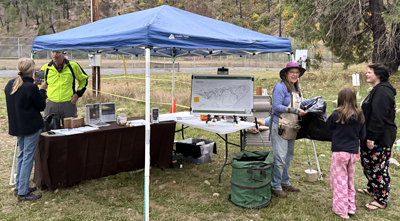
Last Friday evening, as daylight drained from the sky above Blue River Park, neighbors came together under the gathering darkness for a relaxed celebration of community and the natural world. The cool autumn air carried easy conversation, and the topics ranged widely – from what the park might someday become to the surprising richness of life that appears once the sun goes down.
The “Evening in the Park” event provided an opportunity for people to discuss the future of the park while learning more about the natural environment of the upper McKenzie River Valley.
A map of the park was a focal point for discussions about improvements residents would like to see in the coming years. Suggestions ranged from an enclosed stage equipped with a sound system to a dirt-bike training track.
While the ideas were informal and no projects were approved, the conversations reflected interests in expanding the park’s recreational opportunities and making it a more useful gathering place for residents of all ages.
Another topic drawing attention was the proposal to explore a DarkSky designation by reducing unnecessary outdoor lighting.
Discussions even reached beyond Oregon. A couple visiting from Los Angeles took home a copy of the Lighting Guide, intending to share its recommendations with neighbors in Southern California.
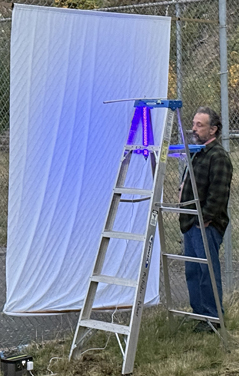
The importance of protecting the nighttime environment was illustrated by Michael Palmer, a retired botanist and local resident who set up an ultraviolet light to attract and examine nocturnal insects.
Since retiring from an academic career that included work at Oklahoma State University, Palmer has concentrated increasingly on entomology, the scientific study of insects.
His research has contributed to the identification of previously unknown species, including a tiny non-biting midge named Limnophyes verebes in honor of Jud Turner’s sculpture located about a quarter-mile from Palmer’s home.
Palmer explained that black lights attract a wide variety of nighttime insects, from colorful moths and beetles to parasitic wasps and tiny midges. The evening’s cool, dry conditions, however, were less than ideal for attracting large numbers of insects.
Besides the event at the park, Palmer is also working to introduce more residents, particularly children, to the study of insects. Recent outreach activities have included microscope demonstrations at community events and a local observance of World Wasp Week.
His demonstration offered a practical connection to the Dark Sky proposal, since artificial lighting can affect the behavior of nocturnal insects and other wildlife.
Even with clouds hiding the stars, Blue River Park offered plenty to explore after dark.
Author